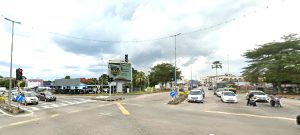
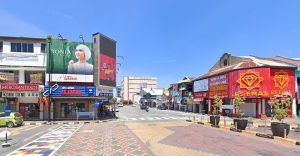



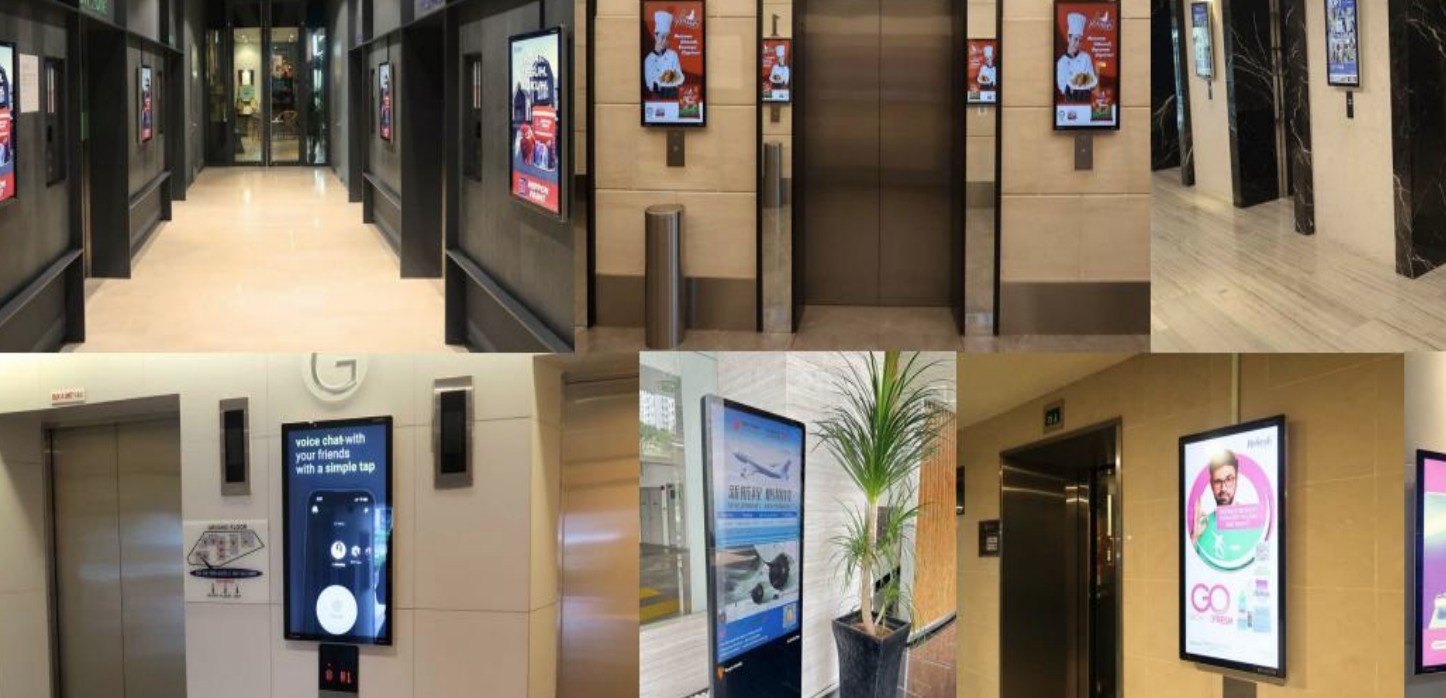
TRAVELODGE CHINATOWN KUALA LUMPUR
Lobby screens | Skrin lobi | 大厅屏数 : 1 Parking screens | Skrin Parking | 停车层屏数 : Lift screens | Skrin Lif | 电梯屏数 : 2 Race | Bangsa | 种族 : Malay,Chinese Mainstream Audience...

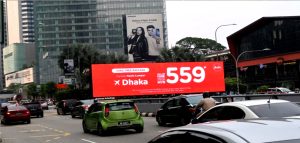
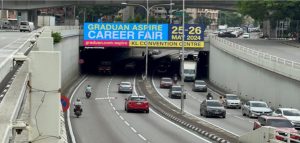
 Iconic Gantry @ LEBUHRAYA PERSEKUTUAN (FT002) SUBANG SHAH ALAM KM 16.30
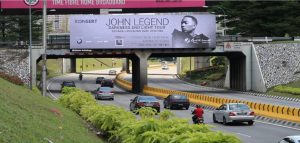
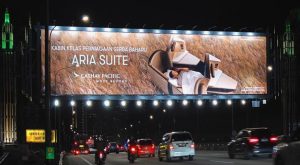 Iconic Gantry @ NKVE KM27.1 Jalan Duta (After Jalan Duta Toll Plaza)

Chinatown is one of the few places in Malaysia where advertising is bought for footfall rather than traffic. That single difference changes every planning assumption.
Kuala Lumpur’s Chinatown centres on Petaling Street, which became the city’s first covered pedestrian precinct following a facelift in 2003.
There is no expressway frontage here and no dwell time at traffic lights. The audience is on foot, moving slowly, and physically close to whatever they are looking at.
A billboard is read at fifty metres in three seconds. A Chinatown format is read at two metres by someone who has already stopped walking.
That allows detail a roadside board could never carry: a menu, a QR code, a product range, an offer with conditions. Most advertisers waste the opportunity by scaling down highway creative.
Stalls typically set up from around 10am and run to about 10pm, but daytime activity stays subdued compared with the surge after dark.
If your creative is not legible under artificial light, most of your audience never sees it properly. Illumination matters more here than in almost any other environment.
Large-format inventory barely exists in a heritage precinct. What is available is smaller, closer and more varied than a standard rate card suggests.
Chinatown’s revitalisation has been driven by cafés, restored lanes and photogenic alleys drawing an urban explorer crowd. Brands that participate in that environment outperform brands that simply hang a banner in it.
Advertising in Kuala Lumpur falls under the Federal Territory Advertisement By-Laws 1982, and DBKL applies them with heritage and cultural considerations factored in.
The 1982 by-law mandated the inclusion of Malay on all signage. Walk Petaling Street today and you will see the result: Malay text added onto older Chinese and English signs, sometimes awkwardly.
DBKL requires all signboard displays within Kuala Lumpur to be vetted by Dewan Bahasa dan Pustaka. Applications are not processed without that clearance.
Chinese script on Petaling Street signage complies with current guidelines. DBKL has publicly confirmed it has no plans to remove or alter the Chinese characters on signboards there.
The working principle is that Malay must be prominent, not that other scripts must be absent. That gives brands genuine room for multilingual creative in this district.
DBKL has been running a major upgrading project across Petaling Street, timed around Visit Malaysia 2026 and delivered in phases with trader associations.
The scope covered roof replacement, reorganisation of electrical wiring, restructured hawker spaces, CCTV, improved lighting and disability-friendly ramps, at an estimated cost of RM7 million.
For advertisers this cuts both ways. Sections were hoarded off during construction, but the finished precinct offers better lighting and a cleaner backdrop than it has had in decades.
Malaysia has several Chinatown-equivalent heritage districts, each with its own council, its own signage rules and a different audience mix.
Do not assume a KL approval transfers. Each local authority applies its own by-laws, and heritage zones typically restrict size, materials, illumination and mounting method.
Chinatown suits brands that benefit from cultural association and physical proximity to purchase, rather than those chasing raw reach numbers.
Treat Chinatown as an experiential environment with a permit process attached, not as discounted outdoor inventory in a busy area.
Get the language vetting done first, build creative for close reading under night lighting, and time the campaign to the festive calendar rather than the media calendar.
Lobby screens | Skrin lobi | 大厅屏数 : 1 Parking screens | Skrin Parking | 停车层屏数 : Lift screens | Skrin Lif | 电梯屏数 : 2 Race | Bangsa | 种族 : Malay,Chinese Mainstream Audience...