In-Store Retail Media Across the MYDIN Network
MYDIN is where a large share of Malaysian households do their real grocery shopping. Not a quick top-up, but the full weekly or monthly trolley run for the whole family.
That makes it one of the most valuable advertising environments in the country. Across 26 stores nationwide, brands can now buy in-store media that reaches shoppers at the moment of selection.
This guide covers the MYDIN shopper, the network’s scale, the retail zones available and every format on offer, from a single shelf banner to a full multi-touchpoint takeover.
Why In-Store Media Works in MYDIN
Most advertising budgets are spent reaching people long before they enter a store. Yet the decision itself, made with a hand on the shelf, happens inside it.
Buying Mode, Not Browsing Mode
A MYDIN shopper walking the aisles is already committed to spending. The gap between seeing a message and buying the product is measured in steps, not days.
Repetition Without Extra Cost
Grocery shopping is habitual. A household that shops MYDIN weekly will see the same campaign several times a month, building familiarity that single-exposure channels cannot match.
- Mass-market reach for both FMCG and non-FMCG brands.
- Proximity to the shelf shortens the path to purchase.
- Family audiences, with parents and children shopping together.
- A brand-safe environment with no unsuitable adjacent content.
- Physical presence that cannot be skipped, blocked or scrolled past.
- Full execution support from planning through to proof of performance.
Understanding the MYDIN Shopper
MYDIN’s shopper base is mass-market, value-driven and community-centric. Understanding this profile matters, because it shapes which products and which messages perform best here.
Income and Household Profile
The core base sits within M40 and B40 households. These are value-driven shoppers who compare prices carefully and respond strongly to clear savings messaging.
Ethnicity and Community Reach
Malay households lead the shopper mix, while affordability gives MYDIN wider appeal across communities, particularly in smaller towns and suburban catchments.
Age, Lifestyle and Behaviour
Shoppers are mainly families aged 30 to 55, focused on bulk buying. Larger households favour value packs and plan around weekly or monthly shopping trips.
Behaviour is price-focused but loyal. Once a brand earns trust in this segment, repeat purchase tends to follow, which rewards consistent visibility over short tactical bursts.
What This Means for Your Creative
- Lead with value, family size and practicality.
- Highlight value packs and multi-buy formats.
- Use Bahasa Malaysia as the primary language where suitable.
- Keep messages simple and direct rather than abstract.
- Build campaigns around festive and school-season demand peaks.
Network Scale and Footfall
The MYDIN network spans 26 stores across Selangor, Kelantan, Terengganu, Negeri Sembilan, Melaka, Perak, Penang, Kedah, Johor and Pahang.
Coverage reaches both urban centres and smaller towns, including Subang Jaya, Tunjong, Kuala Terengganu, Seremban 2, MITC Melaka, Meru Raya, Bukit Jambul, Gong Badak and Bukit Mertajam.
Further stores sit in Taman Batik, Bertam, Kubang Kerian, Parit Buntar, Senawang, Mutiara Rini, Taman Rinting, Taman Gopeng, Semenyih, Jasin, Pulau Sebang, Taman Saga, Pelangi Indah, Jengka, Kulim, Kulai and Gurun.
Estimated Footfall
Annual footfall across the network is estimated at 49.08 million visits, or roughly 4.09 million a month. That averages about 5,244 shoppers per store each day.
How the Numbers Are Derived
These are estimates, not turnstile counts. They come from 2025/2026 transaction counts converted into footfall using a 2.5x multiplier, which accounts for non-buying visitors and group shopping.
The Five Retail Zones
A MYDIN store is not one environment but several. Each zone reaches shoppers in a different mindset along their journey through the store.
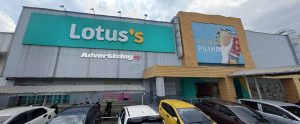
- Carpark Zone: the first and last impression, before entry and after purchase.
- Mall Areas: common walkways and gantries reaching shoppers and passers-by.
- In-Store Entrance: the point where the trolley is empty and choices are still open.
- In-Store Aisle: the shelf environment where selection actually happens.
- Payment Gateway: the checkout queue, ideal for impulse and reminder messaging.
Digital Media in MYDIN
Digital formats bring movement and scheduling flexibility to the store. They suit brands that want to update creative quickly or run short, time-sensitive promotions.
LED Gantries
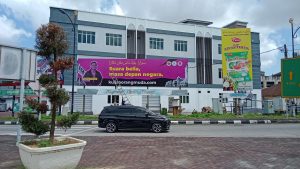
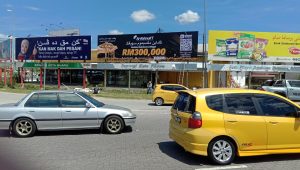
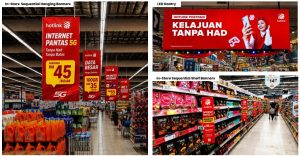
Large-format gantry screens sit at store approaches, catching shoppers before they walk in. They work well for awareness and for pointing traffic toward a specific aisle or promotion.
Centre Court Screens
Mall screens in central concourse areas reach shoppers during natural pauses, when people stop to check a list, meet family members or decide where to head next.
Digital inventory runs on a rotating loop with fixed ad durations and a guaranteed minimum number of plays daily. Loop details are confirmed at booking.
Shelf-Level Ambient Formats
Ambient formats live exactly where the product lives. These are the workhorses of retail media, especially for FMCG brands fighting for attention on a crowded shelf.
Shelf Banners
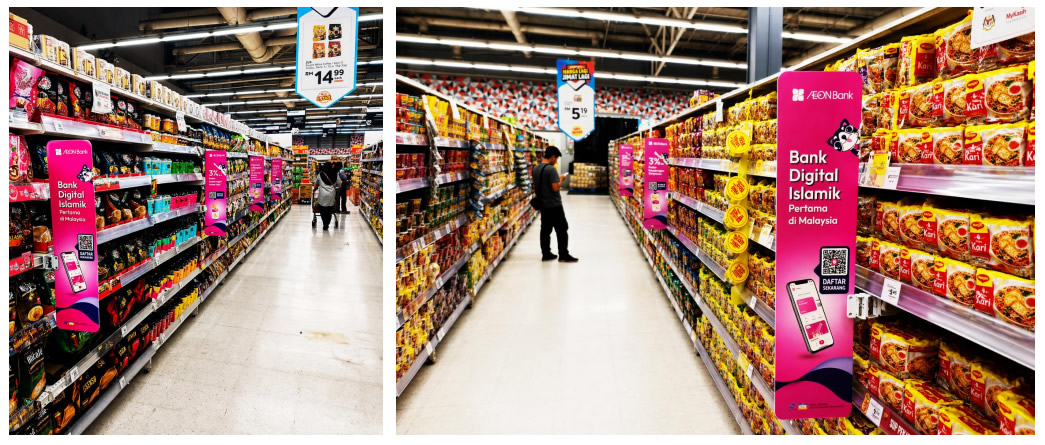
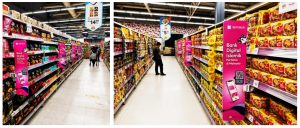
A shelf banner projects outward from the shelf edge, breaking the flat line of packaging. It creates a vertical interruption a shopper notices while scanning the aisle.
The format is particularly valuable for brands with limited shelf space, giving a small SKU presence far larger than its facing would normally allow.
Cross Branding Banners
Cross branding places your banner in a complementary category rather than your own aisle. A biscuit brand can appear beside coffee, or a sauce brand beside rice.
The logic is basket-building. Reaching shoppers in an adjacent aisle prompts an unplanned addition to the trolley, which lifts both category and brand sales.
Product Banners
Product banners sit directly with the stock, often paired with a stacked display unit. Branding and product occupy the same space, so interest converts immediately.
Sequential Banners
Sequential banners repeat along an aisle or hang overhead in a series. Suitable for FMCG and non-FMCG brands alike, they build a rhythm of repetition as shoppers walk.
Proof That Shelf Visibility Delivers
A MYDIN case study makes the commercial case directly. NIMS, a newly listed chocolate and cereal snack, occupied less than half a shelf space.
Despite that limited presence, the brand recorded an 891% sales uplift using a shelf banner alone. No extra display space, no price promotion, just amplified shelf visibility.
Why This Matters for Emerging Brands
- New listings can compete without first winning more shelf space.
- Visibility, not just distribution, drives off-take at the shelf.
- Small-format media can produce disproportionate returns.
- Results give brands a proof point to justify wider listings.
- Performance is traceable through retailer sales data.
Aisle Amplification
Aisle amplification scales the idea up by owning an entire aisle, including chiller and freezer runs. Instead of one banner, the brand dresses the whole corridor.
What an Amplified Aisle Can Include
- Shelf banners and home shelf branding along the full run.
- Header boards and arches framing the aisle entrance.
- Floor stickers drawing shoppers down the aisle.
- Pillar wraps visible from surrounding floor areas.
- Freezer top headers, footer stickers and transparent door stickers for chilled lines.
Why Cold Aisles Perform Well
Chiller and freezer runs are usually visually plain, which makes branded material stand out sharply. Transparent door stickers also brand the moment a shopper reaches inside.
Home Bay Domination
Home bay domination is built for FMCG advertisers who want their permanent shelf location to look like a branded destination rather than standard racking.
The bay is fully dressed with headers, side panels, shelf strips and base branding in brand colours, turning an ordinary fixture into a self-contained brand zone.
Best for Category Leaders
Brands already holding significant shelf space benefit most. The format converts that footprint into visual authority, signalling leadership before a shopper reads a word.
Also Strong for New Variants
A dominated bay gives launches an unmissable stage. Shoppers reaching for their usual product encounter the new line first, which speeds up trial.
Check-Out Domination
Check-out domination covers the payment gateway zone and suits both FMCG and non-FMCG advertisers, combining digital and ambient media in one high-dwell area.
Each check-out zone typically offers four to five media opportunities, which can include cashier counter wraps, sensormatic gate wraps, hanging mobiles and POS screens.
The Queue Advantage
Queueing is the longest stationary moment of any shopping trip. Shoppers stand still, look around and have little else to occupy them, which few environments can offer.
Categories That Perform Here
- Telcos and banks promoting plans, cards and app sign-ups.
- Impulse categories such as confectionery, snacks and drinks.
- Loyalty programme and e-wallet registration drives.
- Service brands needing dwell time to explain an offer.
- Festive campaigns aimed at the full basket.
Multi-Touchpoint Initiatives
Multi-touchpoint initiatives combine in-store innovation, key touchpoints and strategic placements into one coordinated campaign, rather than buying formats in isolation.
The shopper meets the brand in the carpark, at the entrance, along the aisle and again at checkout, so a single visit delivers four or five exposures.
Adding Theatre to the Store
Larger initiatives can include arches, themed aisle entrances and full floor graphics, creating a physical brand world shoppers walk through rather than simply look at.
Making It Work
- Keep one consistent message across every touchpoint.
- Use the same colours and key visual for instant recognition.
- Match message length to the dwell time of each zone.
- Time the campaign around festive periods or a launch.
- Pair the takeover with sampling where possible.
From Offline to Online
Retail media does not stop at the exit. In-store visits can be converted into digital engagement through data, targeting and retargeting, extending a campaign beyond the shopping trip.
Measuring Performance
- Track sales uplift in participating stores against a control group.
- Use QR codes for app installs, vouchers and landing pages.
- Monitor redemption rates on in-store promotions.
- Review proof-of-performance reports covering installation and condition.
- Combine store data with digital retargeting results.
Planning Your MYDIN Campaign
Start with the objective, then choose the format. Awareness campaigns favour gantry and entrance media, while conversion campaigns belong at the shelf.
Practical Considerations
Printing, installation and dismantling are arranged per campaign, and maintenance visits are recommended for campaigns running beyond three months to keep materials in good condition.
Choosing Your Store List
Store selection should follow your distribution. There is little value in dominating an aisle where the product is not listed or frequently out of stock.
The Bottom Line
MYDIN offers scale, frequency and a shopper base that buys in volume. For brands built on value, family sizes and everyday essentials, it is a natural retail media home.
With 26 stores and an estimated 49 million annual visits, the network delivers reach and precision together. Media and production rates are quoted separately, based on your campaign brief.


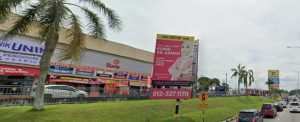
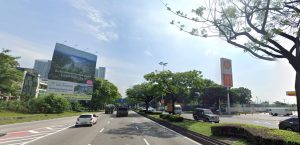
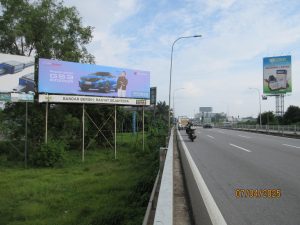
 Iconic Gantry @ LEBUHRAYA PERSEKUTUAN (FT002) SUBANG SHAH ALAM KM 16.30
 Iconic Gantry @ NKVE KM27.1 Jalan Duta (After Jalan Duta Toll Plaza)
 Iconic Gantry @ LEBUHRAYA UTARA SELATAN (PLUS) NILAI KE SEREMBAN