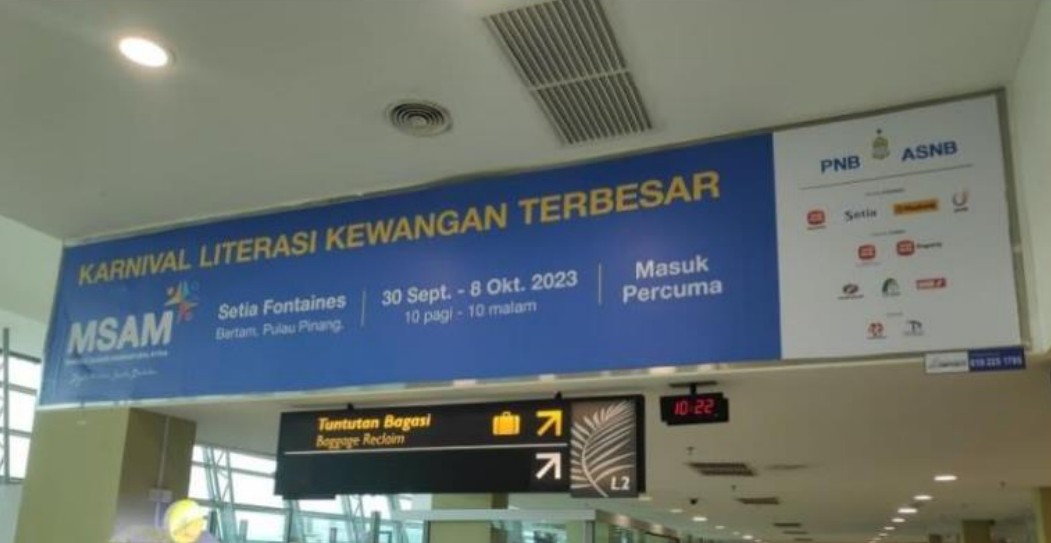
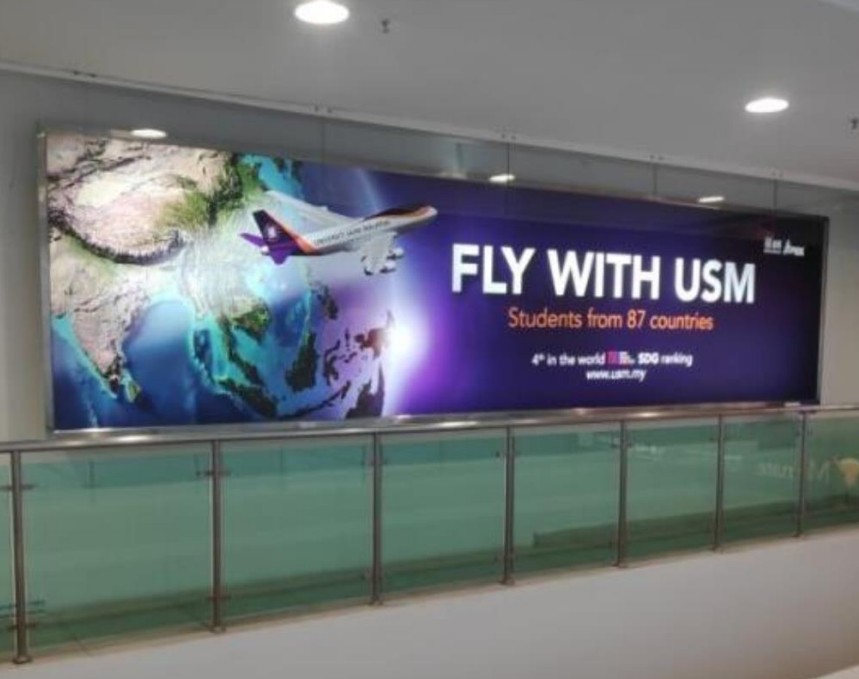
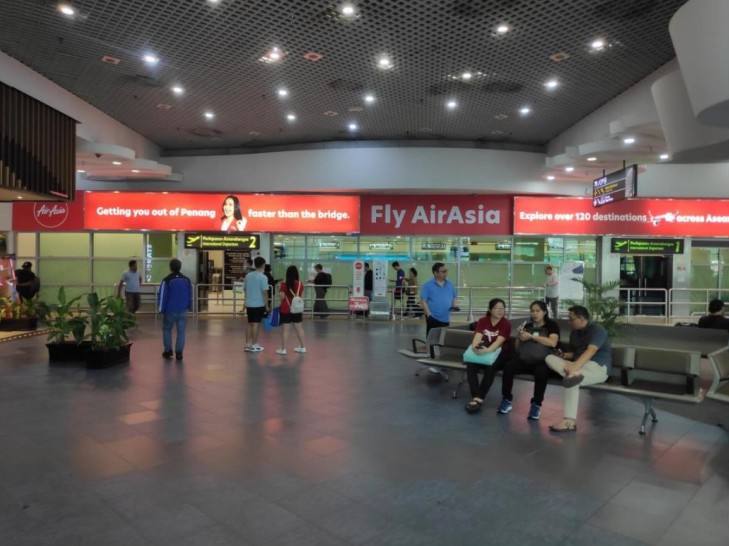
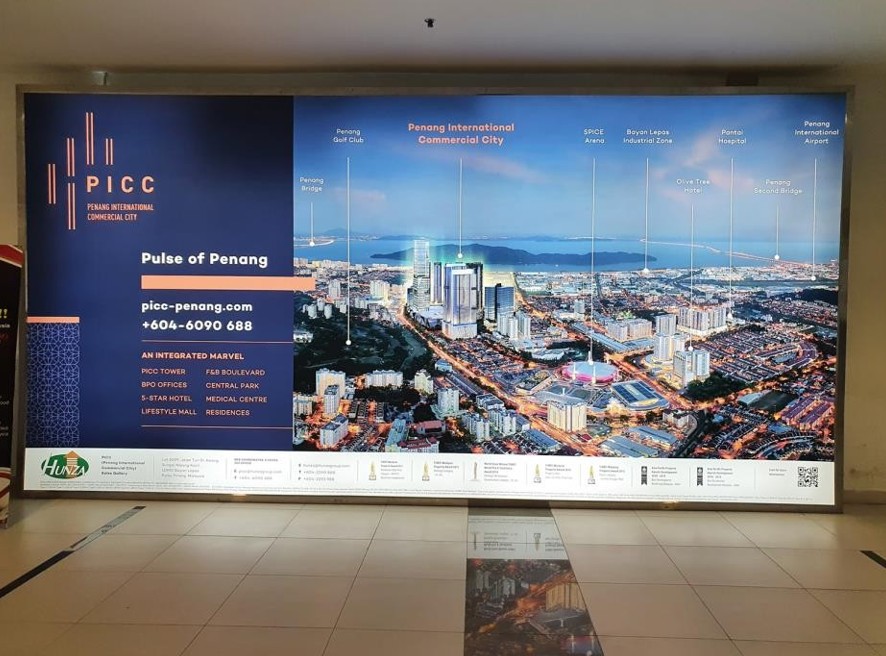
Access to affluent, frequent travellers. Strong reach among higher-income travellers
Fewer advertisers, higher share-of-voice
Longer dwell time, especially during delays
Close viewing distance for stronger impact
Step-by-Step Guide
How to Advertise in Malaysia Airports
1
Choose Your Terminal & Audience
Understand the terminal traffic type and decide on arrivals, departures, or both. International terminals attract high-value visitors. Domestic terminals serve frequent business commuters.
2
Decide Duration, Format & Budget
Short-term campaign? Go digital — flexible and fast to activate. Long-term campaign? Static is more cost-effective with exclusive placement.
Request traffic details and impression data from us. Reserve your preferred slot — held for a few days cooling period.
3
Confirm Slot & Request Official Quote
Confirm your slot within 3 days of reservation and request an official quote from us.
4
Make Deposit or Sign Quote
Pay your deposit or sign the quote to officially secure your campaign. This locks in your slot, rate, and campaign dates.
5
Submit Visual & Await Approval
Request creative dimensions from us and begin your artwork production. Authority approval requires 3 to 5 business days depending on visual type. DBP is not required for airport ads.
6
Launch Campaign & Monitor Performance
Your campaign goes live on schedule. Access your live impression dashboard within 3 days of launch and receive a full performance report from us upon completion.
Ready to get started?
Contact us to check availability, get traffic data, and reserve your slot today.
Gender
KLIA Terminal 1 – MTB
KLIA Terminal 2
Gender
64% Male
54% Male
Age
37 Years
35 Years
Income
High
Mid
Reason to trip
28% Business
14% Business
Trip Frequency
High
Mid
Dwell Time
98 Minutes
104 Minutes
Residency
36% Local
45% Local
KLIA AIRPORTS PASSENGERS SUMMARY
KLIA 1 & 2 TOTAL:
3,762,853 Monthly Passengers
121,382 Daily Passengers
KLIA/Terminal 1 AIRPORT
MALAYSIA’S NUMBER 1 Airport Delivering 60% of all flyers in Malaysia.
SOUTH EAST ASIA’S Fastest Growing Airport : 11%
The World’s Busiest International Route KLIA to Changi
POTENTIAL HIGH CAPACITY – 140 million Passengers
BUSIEST DESTINATION For Chinese Travelers
2025 – Terminal 1
International
Jan
Feb
Mar
Apr
May
Jun
Arrival
1152324
1068892
905100
1089222
1028605
1123637
Departure
1158961
1089150
985863
1114075
1140302
1052031
Transit
16664
10990
10044
13308
10081
12492
Total
2327949
2169032
1901007
2216605
2178988
2188160
Domestic
Jan
Feb
Mar
Apr
May
Jun
Arrival
277162
309874
233360
314374
313446
308314
Departure
280133
303861
265341
283822
304186
319891
Transit
0
0
0
0
0
0
Total
557295
613735
498701
598196
617632
628205
Total Terminal 1
2885244
2782767
2399708
2814801
2796620
2816365
International
Jul
Aug
Sep
Oct
Total_2025
Arrival
1202680
1151399
1160018
1188153
11070030
Departure
1173673
1269882
1172095
1238465
11394497
Transit
17793
16814
16447
15135
139768
Total
2394146
2438095
2348560
2441753
22604295
Domestic
Jul
Aug
Sep
Oct
Arrival
283879
319881
352299
351435
3064024
Departure
291732
313061
344876
343205
3050108
Transit
0
0
0
0
0
Total
575611
632942
697175
694640
6114132
Total Terminal 1
2969757
3071037
3045735
3136393
28718427
KLIA2/Terminal 2 AIRPORT
KLIA 2(Terminal 2) – The World’s Largest Terminal Built for LCCs
KLIA 2(Terminal 2) – The World’s Third Best Low Cost Terminal (Skytrax World Airport Awards)
2025 – Terminal 2
International
Jan
Feb
Mar
Apr
May
Jun
Arrival
807510
712526
619358
721884
657879
702590
Departure
846759
742099
685507
694597
701343
679947
Transit
167
0
223
0
0
0
Total
1654436
1454625
1305088
1416481
1359222
1382537
Domestic
453694
396379
298369
452509
452400
443781
Arrival
435179
384616
333662
405928
445131
437009
Departure
0
0
0
0
0
0
Transit
888873
780995
632031
858437
897531
880790
Total
2543309
2235620
1937119
2274918
2256753
2263327
GRAND TOTAL
5428553
5018387
4336827
5089719
5053373
5079692
International
Jul
Aug
Sep
Oct
Total_2025
Arrival
766040
726992
709502
693108
7117389
Departure
777786
794313
704911
746218
7373480
Transit
0
0
0
0
390
Total
1543826
1521305
1414413
1439326
14491259
Domestic
457691
466543
444860
423565
4289791
Arrival
458524
452457
426513
410975
4189994
Departure
0
0
0
0
0
Transit
916215
919000
871373
834540
8479785
Total
2460041
2440305
2285786
2273866
22971044
GRAND TOTAL
5429798
5511342
5331521
5410259
51689471
KLIA 1 & 2 (Terminal 1 & 2) TRAFFIC OVERVIEW
KLIA 2 : 53%
KLIA : 47%
TOP AIRLINES
TOP AIRLINE
MARKET
SHARE
AirAsia
37.9%
Malaysia Airlines
22.3%
AirAsia X
9.4%
Malindo Air
7.4%
Indonesia AirAsia
2.1%
TOP INT’L DESTINATIONS
DESTINATION
#PAX
GROWTH
Singapore
4,097,000
1.0%
Jakarta
2,716,808
8.0%
Bangkok
2,554,263
2.0%
Bali
1,587,021
9.0%
Hong Kong
1,580,320
-0.3%
SOURCE:
Source: MAHB Passenger Statistics
TRAVELLER PROFILES
CHINESE
Responsible for 40% Travel Retail Purchases
Nearly 4.2m Chinese arrivals per year
+31% Chinese tourist growth YoY
Malaysia – 6th preferred Chinese holiday destinations
Malaysia is the 8th market for international Chinese spend
PREMIUM BUSINESS TRAVELLERS
25.2m Business Passengers movement annually
Business Travellers take an average of 7.7 trips annually
KLIA-Singapore is the busiest business route globally
61% make purchases while waiting for their flight
67% notice airport ads
MILLENNIALS
Largest demographic at the airport: 25.8m
75% notice airport ads
80% combine business and leisure trips
High spenders and very active online shoppers
97% smart phone penetration among travellers
PREMIUM LEISURE TRAVELLERS
Leisure Travellers spend an average of 2.5 hours at the airport
Air Asia is the largest LCC at the airport: 25% share
82% notice airport advertising
86% make purchases while waiting for their flight
Understanding Passenger Dwell Time at KLIA: K1 and K2 Sections
Passenger dwell time refers to the amount of time travelers spend in an airport before boarding, after arrival, or while transferring between flights. At Kuala Lumpur International Airport, dwell time differs between K1, or KLIA Terminal 1, and K2, or KLIA Terminal 2, because both terminals serve different passenger profiles, airline models, and terminal layouts.
KLIA Terminal 1 is the airport’s original full-service terminal. It mainly supports international and premium carrier operations, including airlines such as Malaysia Airlines. The terminal includes the Main Terminal Building, contact piers, and a satellite terminal. Because of its larger international passenger mix, dwell time in K1 is often shaped by check-in, immigration, security clearance, lounge usage, duty-free shopping, and gate waiting.
In K1, passengers usually spend the longest time in the departure hall, immigration area, retail zone, lounges, and gate areas. For international departures, dwell time may range from 90 to 180 minutes, especially for passengers who arrive early for long-haul flights. Business and premium passengers may spend more time in lounges, while leisure travelers often spend time in duty-free outlets and food areas. Domestic passengers generally have shorter dwell times, often around 60 to 90 minutes, depending on airline check-in requirements and security flow.
K2, formerly known as klia2, is designed mainly for low-cost carrier operations and is strongly associated with AirAsia. Its layout is more retail-oriented, with Gateway@klia2 connected to the terminal. This makes dwell time in K2 more commercially distributed, as passengers often spend time in shopping, dining, convenience stores, and self-service check-in zones before entering the restricted area.
In K2, dwell time is often concentrated in the Gateway@klia2 mall, check-in rows, baggage drop counters, security screening, immigration, and long walking routes to piers. For international passengers, dwell time may range from 120 to 180 minutes, partly because low-cost carrier passengers are more likely to queue for document checks, baggage drop, and boarding procedures. For domestic flights, dwell time may be around 75 to 120 minutes, especially during peak periods.
A key difference between K1 and K2 is the passenger journey. K1 has a more traditional airport flow, where passengers move from check-in to immigration, then into airside retail or lounges before heading to the gate. K2 has a more extended commercial journey, with passengers often spending meaningful time landside at Gateway@klia2 before proceeding deeper into the terminal. K2 also has longer walking distances to some gates, especially for passengers using piers P and Q.
Estimated Dwell Time by Section
Section
K1 / KLIA Terminal 1
K2 / KLIA Terminal 2
Arrival at terminal / drop-off
5-15 minutes
10-20 minutes
Check-in / baggage drop
15-40 minutes
20-50 minutes
Security and immigration
20-45 minutes
25-60 minutes
Retail and dining
20-60 minutes
30-75 minutes
Lounge / waiting area
30-90 minutes
20-60 minutes
Walking to gate
10-25 minutes
15-35 minutes
Gate waiting / boarding
20-45 minutes
25-50 minutes
Overall, K1 dwell time is more influenced by international processing, lounges, and full-service airline behavior, while K2 dwell time is more affected by retail exposure, low-cost carrier queues, self-service processes, and walking distance. From a commercial and operational perspective, K2 may offer stronger retail dwell opportunities because passengers interact with Gateway@klia2 and terminal shops before reaching the gate. K1, however, may generate higher-value dwell time through duty-free shopping, premium lounges, and international passenger spending.
In conclusion, both KLIA terminals have distinct dwell-time patterns. K1 supports a more premium and international airport experience, while K2 supports a high-volume, low-cost carrier environment with strong landside and airside retail activity. Understanding dwell time by section helps airport operators improve queue management, retail planning, passenger comfort, and overall terminal efficiency.
Airports are the best place to target inbound and outbound tourists
At the airport, your ads will be extremely effective if you are targeting a large group of both business and leisure travellers as well as their friends and families. This is because they spend an average of 1 to 1.5 hours at the airports either waiting to depart or for the arrival of passengers. As such, your ads will garner high impressions at the media spots here with long ad-view durations.
With Advertising.my, you get the best Klia and Klia2 Airport Advertising rates!
Airports represent an important location for the country as it is the main entry point for visitors into the country and those who are leaving. In Malaysia, there are many airports which are operating around the country that service both international and domestic routes. The most prominent airport would be the Klia International Airport and Klia2. In the airport, billboard advertising is adopted in several scales ranging from digital poster boards to smaller boards used in trolleys and along the conveyor belts for luggage. Apart from that, billboards in airports are seen across the transit rooms, boarding rooms and along the duty-free shopping locations as well.
LightBox Advertising Panel
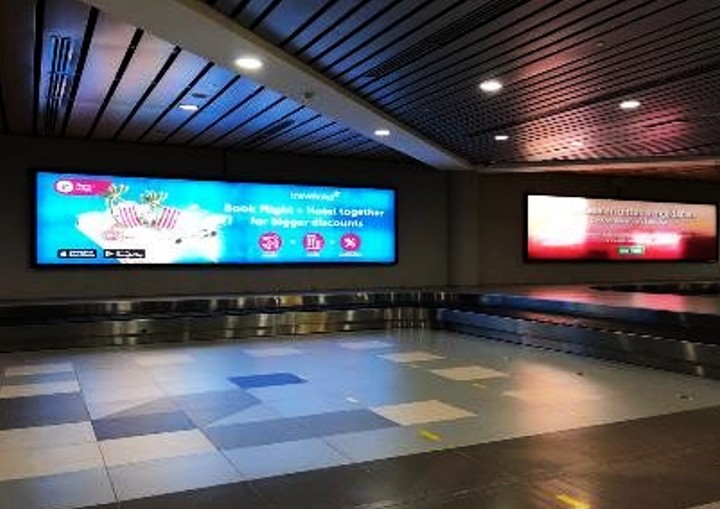
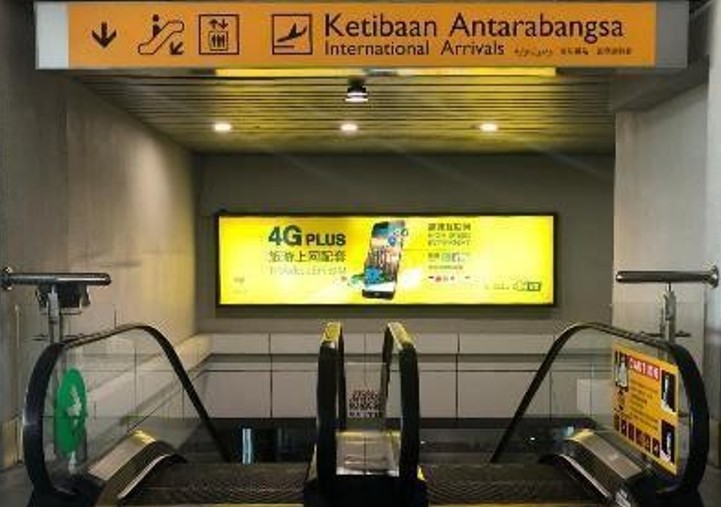
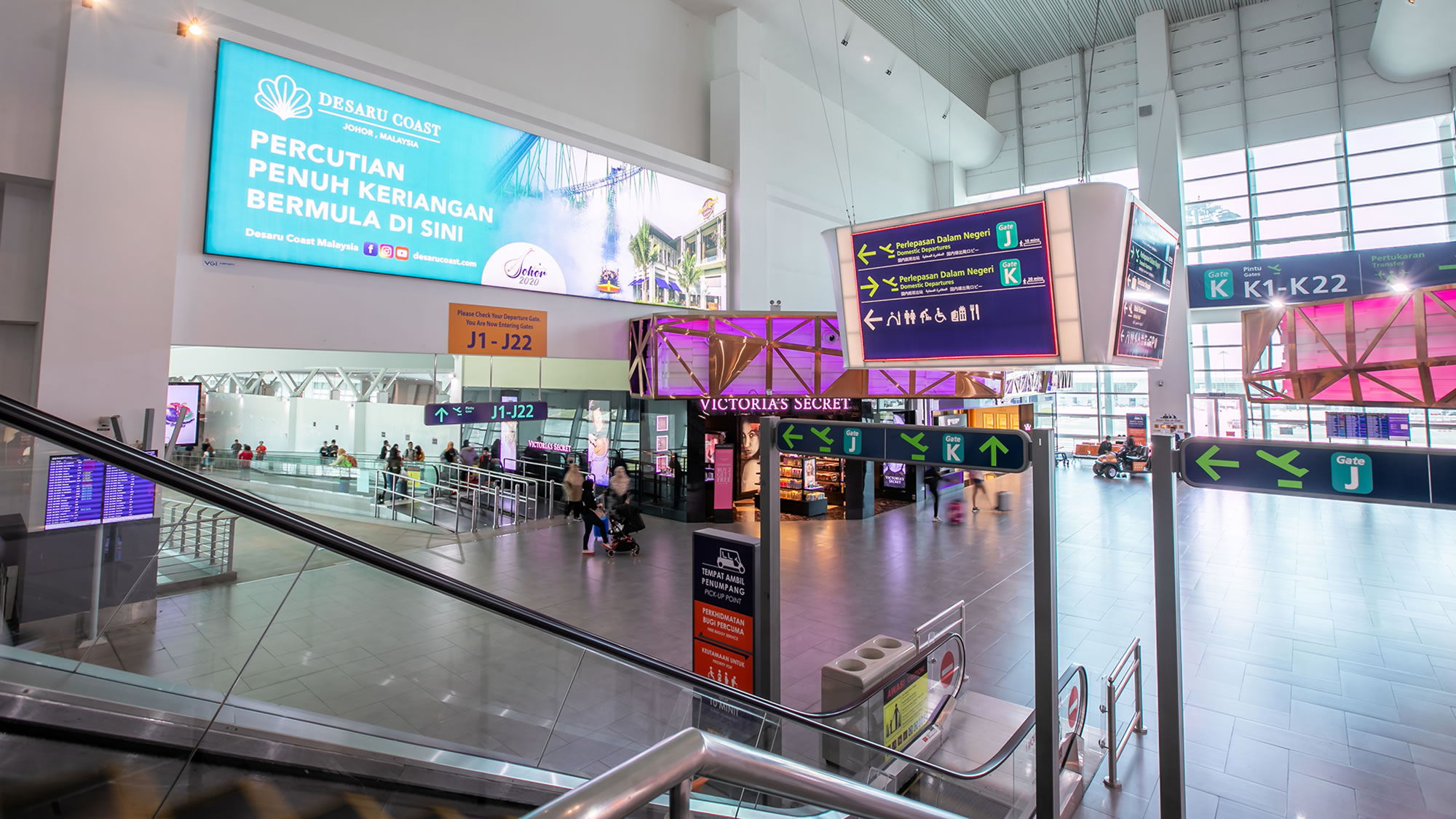
Lightboxes are commonly seen at airports where they are very usually placed at prominent locations like the conveyor belt to collect baggage, at arrival and departure halls and other locations. These lightboxes allow you to place your ad in various sizes and illuminated from behind.
Wall Mural
If you have a loud and captivating ad that you want to spread across the wall, you can use murals at the airport. This is where passengers can see your ad when they arrive or when they are about to depart because the murals are usually located at high traffic and viewable areas. The size of the mural can be up to 42ft x 6ft in size.
Wallscapes
Basically, this is a media which is very impactful because your ad basically wrap around a large area of the wall within the airport terminal. This media is available in various shapes and sizes and can be highly effective.
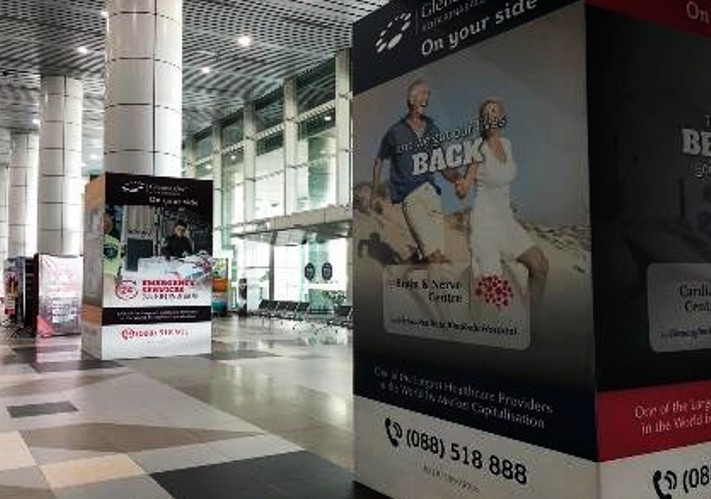
Pillar Wraps
You will notice that there are many pillars located around all the terminals of the airport. You can sponsor any of the pillars by placing your ad as a wraparound. The more pillars you wrap, the more effective it is as your ad enjoys constant reminders.
Ambient Media
There are several ambient media available Klia1 and Klia2 terminals which you can choose from to suit your campaign. Among them:
Arrival and Departure Walk Way Panels
– This refers to the long walk ways in the terminal and something which passengers are sure to look.
Pillars @ Halls or Eraman Shopping Centre
– You can place your ads on the pillars around the terminal for more effective and higher impressions.
Glass Display at prominent areas
– This media can be very attractive if used well since glass panels are scattered all around the terminal.
Wall Spectacular Lightboxes
These are spectaculars which can raise the profile of your ad as they are specifically designed. The lightboxes are mounted on the walls of the terminal and very effective for repeated reminders of promotions and events.
Lightbox at Entrance
The lightboxes at the entrance of of Klia and Klia2 are highly impactful spots if you want to create awareness with visitors to the airport. Basically, your ad can be seen when the visitors arrive as well as when they depart, leaving a lasting impression with them.
Wall Spectacular
This media helps your brand to stand out among others since there are so many different types of media available at the Concourse. If your brand wants something different to make an impact, this media is the perfect option.
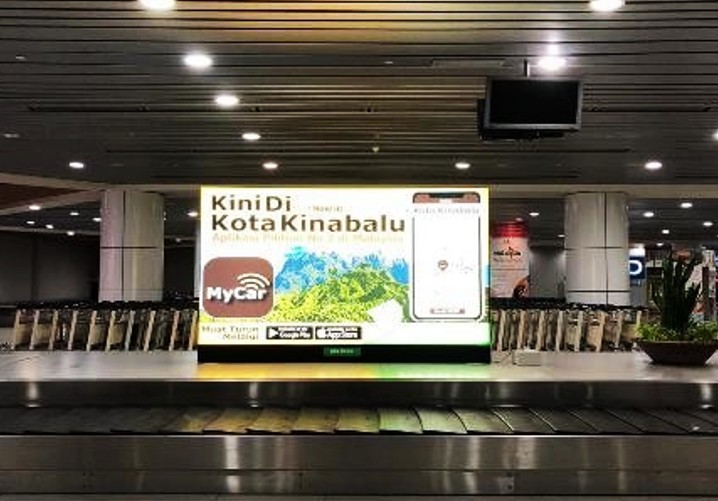
Baggage Claim Ambient
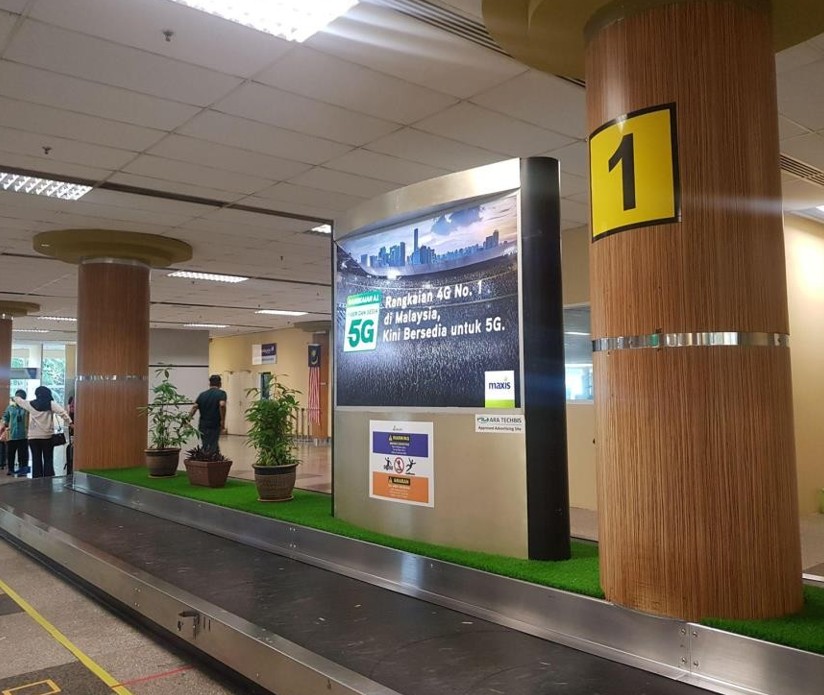
Passengers who are waiting for their baggage upon arrival spend an average of 15 to 20 minutes at these locations. Your ad will be extremely effective since they have a long duration of exposure here. Digital and static formats are available here.
Corridors
This refers to the spectaculars that can be placed around the corridors of the terminal. Capitalizing on the fact that most people spend an average of 1 to 1.5 hours in the airports, your spectaculars can easily reach your target audience especially if they are placed at high traffic spots.
Huge Hanging Lightboxes
This is a unique media which can be seen by almost every passer-by at the terminal. This lightbox is double-sided which means that your ad will be exposed to the ongoing and incoming traffic of viewers at the concourse and travelators.
Wall and Miscellaneous Panel Stickers
You can practically place your sticker ads anywhere in the terminal as long as they are not obstructive and aesthetically pleasing. This media is very effective if used at entrances, boarding halls and other high traffic locations.
The line is clear between advertising for airlines and advertising in airlines. The former works on brand promotion and marketing for airline services and operators. The latter meanwhile offers a larger scale of opportunities where related brand owners and marketers place their ads in paces around the aviation industry. Moving transportations offer very good platforms for advertising and when it they are on the outside body of these machines, they can be highly effective.
Plane liveries: Advertisers enjoy a very cost-effective platform to channel their brand messages across regions.
The planes will travel to some of the most high-profile airports across the world, delivering the brand messages to some of the top destinations globally.
In-flight advertising opportunities
Within any flight, opportunities for advertising include:
Ambient – advertisers can make use of the in-flight ambient as part of their integrated campaign, pushing to create the environment and scenario to align with their brand identity
Entertainment– This is provided through the available services in every flight of the airline whether it is through their proprietary channels or internet services.
Above and Beyond: Why Airport Advertising Delivers Unrivalled Brand Prestige and Impact
Premium Audiences, Prime Environments and Unmatched Advertising Visibility
Airport advertising stands in a league of its own when it comes to reaching high-value, globally minded consumers. With millions of domestic and international passengers moving through airport terminals every day, airports offer an extraordinary concentration of engaged, receptive audiences that no other out-of-home media environment can replicate. From check-in to boarding gate, every step of the passenger journey presents a powerful brand touchpoint.
Nowhere to Go, Nowhere to Hide: Airport passengers are grounded for an average of 1–3 hours with nowhere to rush and nothing to escape to. Unlike any other advertising environment, airports deliver genuinely captive audiences who are relaxed, attentive, and far more receptive to brand messaging than consumers encountered in busy urban or digital spaces.
The World Walks Through Here: International terminals bring together an extraordinary mix of nationalities, cultures, and consumer profiles under one roof. For brands with global ambitions, a single airport advertising placement delivers multinational reach that would otherwise require complex, multi-market campaigns to achieve — making airports one of the most efficient global media channels available.
They’re Already in Spending Mode: Airport travellers are among the most commercially active consumers on the planet. Whether purchasing travel accessories, booking experiences, or discovering new brands in duty-free, passengers arrive at airports primed to spend. Your brand message reaches them at the precise moment their purchasing intent is at its absolute peak.
Prestige, Recall and Innovation — The Airport Advertising Advantage
Where Prestige Meets Placement: Advertising in a major international airport sends an immediate and powerful signal — your brand belongs among the world’s most recognised and respected names. The premium nature of the airport environment elevates brand perception instantly, building trust, credibility, and aspiration in the minds of high-value consumers who frequent these spaces.
Seen Once, Remembered Long: Unlike fleeting digital impressions or a glanced-at billboard, airport advertising enjoys extended, repeated exposure throughout the passenger journey. From terminal entry to departure gate, passengers encounter brand messages multiple times across a single visit — a powerful repetition effect that dramatically deepens brand recall and drives long-term recognition.
Lounge Access, Elite Audiences: Airport lounge advertising places brands in the most exclusive and commercially valuable spaces in the entire airport ecosystem. Business class passengers, corporate decision-makers, and high-net-worth frequent flyers occupy these environments for extended periods in a calm, distraction-free setting — making lounge placements the most targeted and prestigious advertising opportunity the airport has to offer.
Technology That Commands Attention: Modern airports are at the forefront of advertising innovation, featuring floor-to-ceiling digital displays, programmatic DOOH targeting, augmented reality activations, and AI-powered audience analytics. These cutting-edge formats allow brands to deliver dynamic, contextually relevant, and visually spectacular campaigns that stop passengers in their tracks and leave lasting impressions.
Smart Spend, Proven Returns: Airport advertising is underpinned by verified passenger data, footfall analytics, and advanced impression measurement tools. Every campaign is supported by transparent, quantifiable metrics that give brands full confidence their investment is performing. With a high-value audience and exceptional dwell time, the return on investment airport advertising delivers is difficult to match across any other out-of-home media format.
Every Format, Every Touchpoint: From WiFi sponsorship splash pages and digital aerobridge wraps to experiential brand activations and integrated retail placements, airport advertising offers an unmatched diversity of creative formats. Brands can build a seamless, end-to-end presence across the entire passenger journey — ensuring consistent, impactful messaging from the moment travellers arrive to the moment they board.
Minds Open, Hearts Ready: Travellers are in a uniquely receptive emotional state — excited, curious, and open to new experiences. Whether embarking on a holiday or heading into an important business meeting, passengers bring an elevated mindset to the airport environment that makes them significantly more responsive to brand messaging, product discovery, and purchase consideration than consumers encountered in everyday settings.
M Network bring the campaign to the skies and tracks
Advertising in airlines provides different opportunities for marketers as there are many highly visible spaces available which are impactful and captivating. In and around the airports and the surrounding spaces, advertising opportunities are commonly taken up by the likes of airlines, airports, venues, transportation organisations, brand owners and other firms. The following are some of the possible areas for advertising in airlines. These types of media offer advertisers a whole new range of marketing tools that can stretch their marketing dollars to better reach their intended audience.
Partnerships and Retail
Every airline that operates in the skies will have its customer reward points systems (often called miles points). Most of them have a shopping catalogue on their flights, offering duty-free shopping for the passengers. Partnerships are very effective campaigns as brand owners will want to have their products sold on the flights as there can be a limited quantity of each product. Hence, retail opportunities, stocking and inventory and rewards programmes for the passengers would go a long way for brand owners on these platforms.
A subsidiary of Airports Group
Advertising.My is a subsidiary of the Airports Group, with offices across Malaysia Airports, Singapore, and Australia Airports. The company specialises in airport advertising across multiple markets, including Malaysia, Australia, Singapore, Indonesia, and the Philippines, among others.
Advertising.My’s media inventory span a wide range of formats — from digital screens and static boards in arrival and departure areas, to baggage reclaim displays, car park barriers, in-flight advertising with select airlines, and various custom media options.
Appointed Media Agency for KLIA1 & KLIA2
Advertising.My is officially the appointed company to sell and market all advertising formats at KLIA Terminal 1 and Terminal 2 Airports, KKIA(Kota Kinabalu International Airport), Penang Airport, Kuching Airport, covering digital screens, static boards, lightboxes, baggage reclaim screens, and overhead displays.
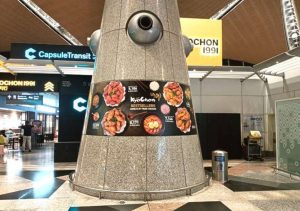
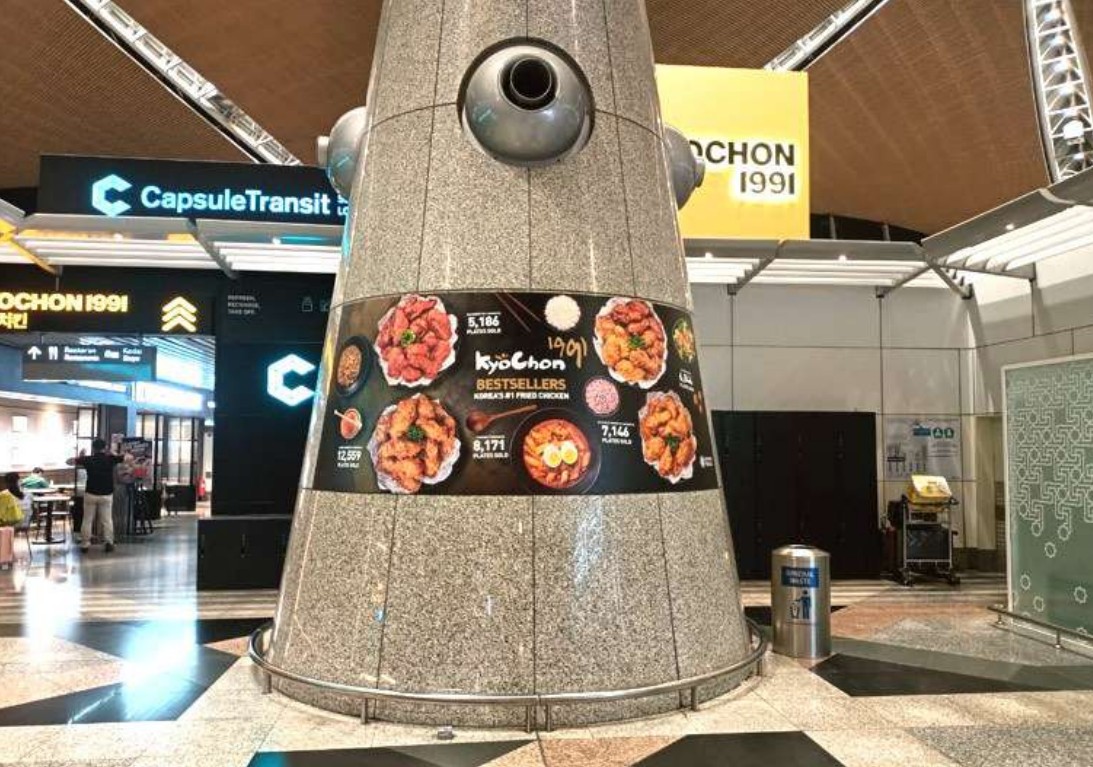
KLIA1 Media Opportunity A distinctive pillar wrap positioned inside KLIA Terminal 1, designed to create a high-impact brand presence for passengers moving through the domestic departure area. Domestic Departures Only One Unit Available Capsule-Like Format...
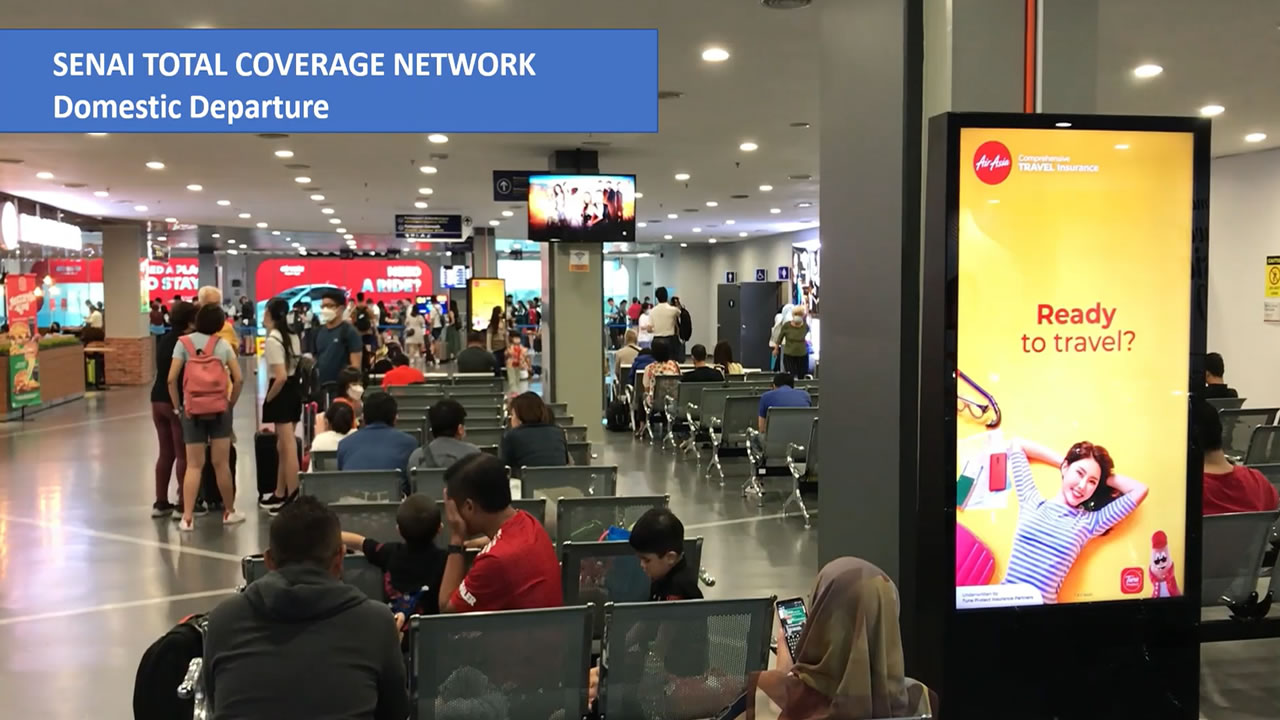
The digital screen network at Senai Airport covers departure and arrival zones, giving brands access to travellers during natural dwell time. It reaches business passengers, tourists, families, airport staff and Johor-based visitors moving through the...
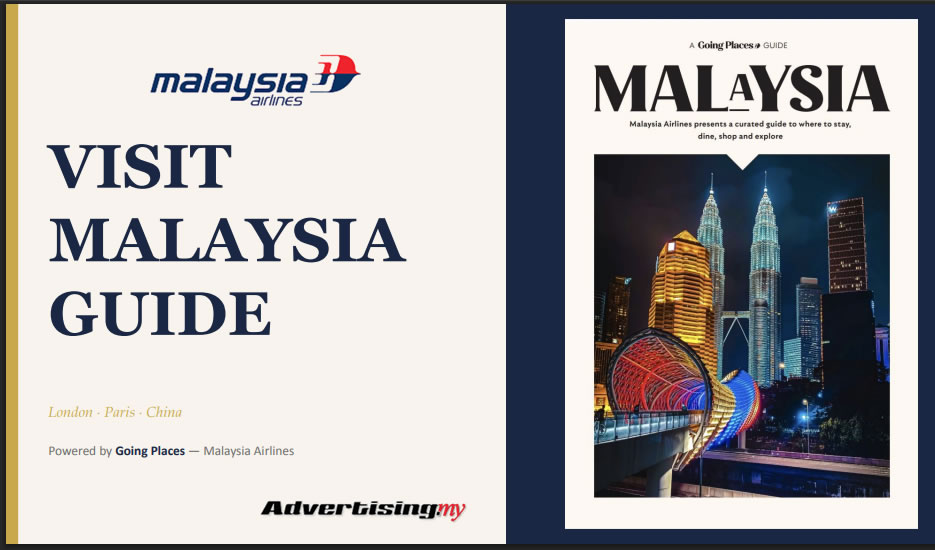
This premium inflight guide places your brand directly in the hands of Malaysia Airlines passengers. With hand distribution by cabin crew and destination-focused content, it offers an engaging travel media platform for brands targeting premium...
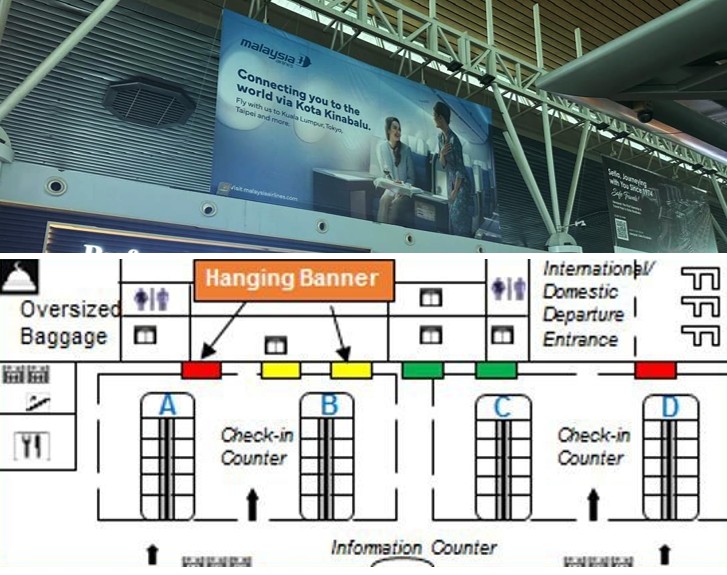
Before passengers enter the restricted departure process, public concourse traffic includes travellers, send-off families, airport workers and retail users moving with time-sensitive intent. This KKIA departure placement reaches people while they are still in a...
After domestic passengers land, the airside arrival route gives brands a controlled environment where travellers are still moving through airport processing before meeting the public. This standee lightbox reaches people while they are alert, walking...
As domestic arrivals pass through the airside corridor, wall lightbox visibility can hold attention without interrupting passenger flow. This placement reaches travellers in a controlled airport route before they enter the public arrival environment or...
Travellers arriving landside at KKIA often pause around meeting points, exits, transport planning and baggage-related movement. Pillar graphics at level 1 provide close-range visibility in this practical passenger environment, where people are scanning for directions...
After domestic passengers step into the landside arrival area, railing graphics can stay visible while they wait, meet family, arrange transport or move toward exits. This KKIA level 1 placement uses multiple surfaces, giving brands...
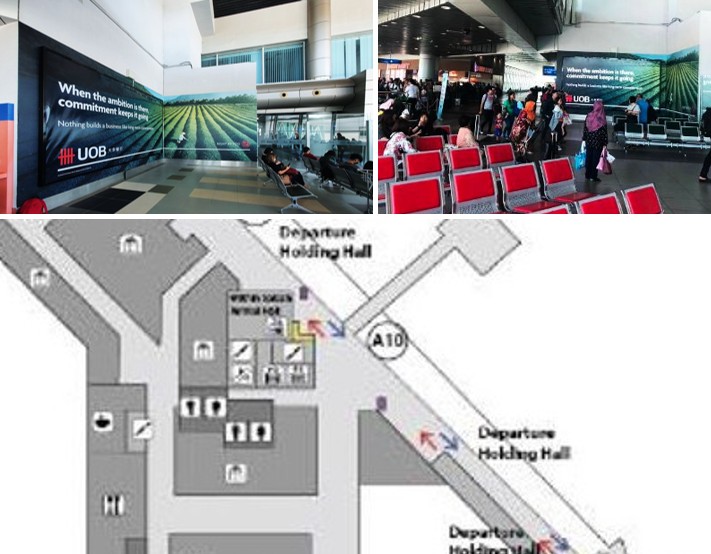
Once passengers enter the airside departure zone, they are usually focused on gates, boarding time, security flow and last checks before flying. This wall graphic placement reaches domestic travellers in a controlled airport environment where...
Before domestic passengers move fully into the airside departure process, landside level 3 traffic includes flyers, families, airport users and retail visitors preparing for check-in, waiting or security flow. This placement reaches people while they...
Before international passengers reach the public hall, level 2 arrival movement gives brands a calm but purposeful contact point. Travellers are usually checking directions, preparing documents, thinking about luggage and planning transport, which creates a...
International arrivals often move with strong attention on immigration, baggage, transport and first destination plans. This airside level 3 placement reaches travellers at a useful airport stage before they fully enter Kota Kinabalu’s public arrival...
After passengers leave the aircraft, arrival movement is still controlled and attention is naturally directed toward immigration, baggage and exit flow. This airside level 2 placement reaches both international and domestic travellers before they enter...
At ground-level public movement, airport users are usually dealing with pickups, arrivals, baggage, meeting points and onward transport. This KKIA public concourse placement reaches a practical mix of passengers, families, drivers and visitors when decisions...
As travellers and companions move through KKIA’s upper public concourse, brands can reach people before security, departure activity or airport meeting points divide the audience. This level works well for broad visibility because passengers, send-off...
Before travellers complete formal entry procedures, attention is naturally concentrated around counters, queues and official airport movement. This public concourse level placement at KKIA gives brands exposure to passengers and companions in a high-intent, high-awareness...
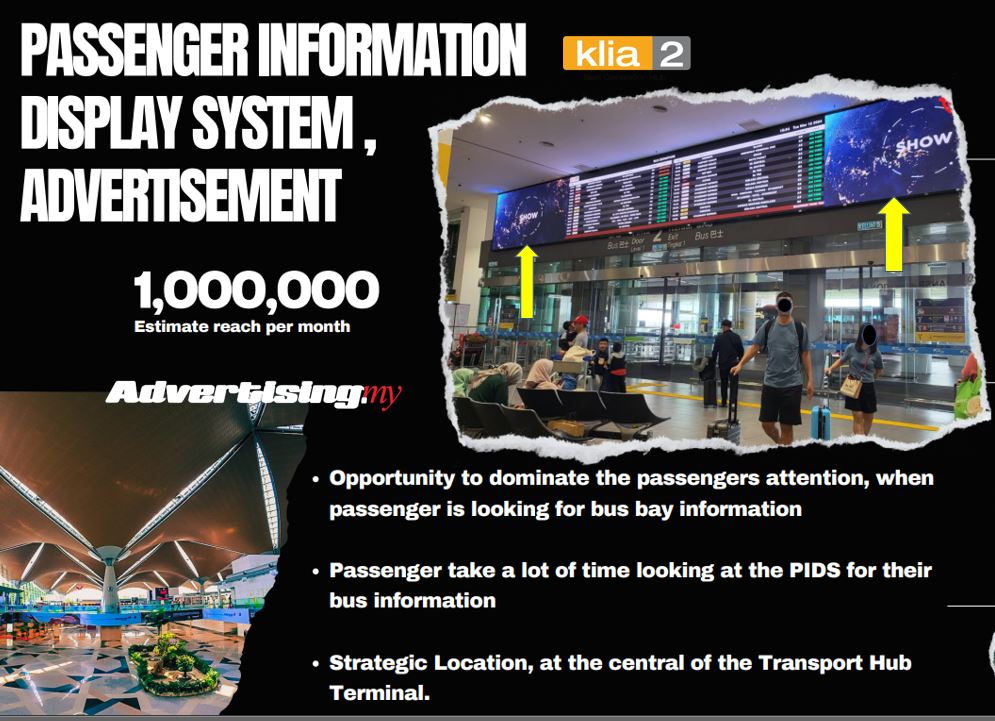
Main Departure Gate – Opportunity to dominate the passengers attention, when passenger is looking for bus bay information. Passenger take a lot of time looking at the PIDS for their bus information. Strategic Location, at...
Digital screens at prominent locations at the KLIA airport This is a great option to advertise if you aim to reach your target segment of travellers who are heading to the baggage areas. There are...
Long duration of viewers The Klia Arrival Hall is one of the locations in the airport with the highest traffic. There are several groups of people where which includes passengers, transport providers, accommodation providers and...
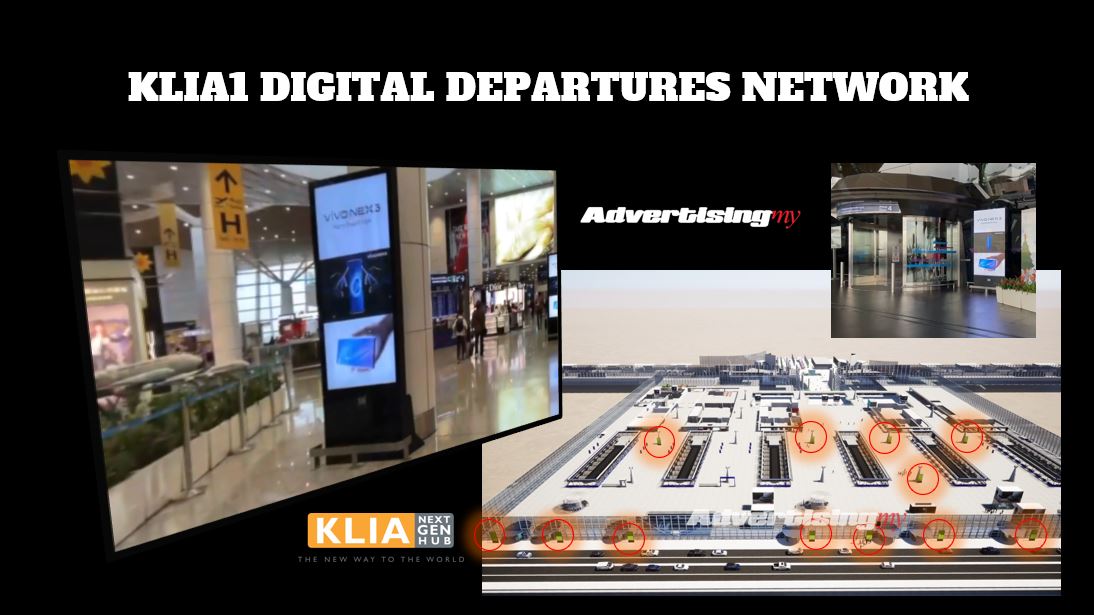
New tactical digital network. Network of 23 portrait format high-definition digital screens. Screens located throughout key departure areas to ensure message repetition at key touch points on passenger journey. Maximum of 6 advertisers ensuring maximum...
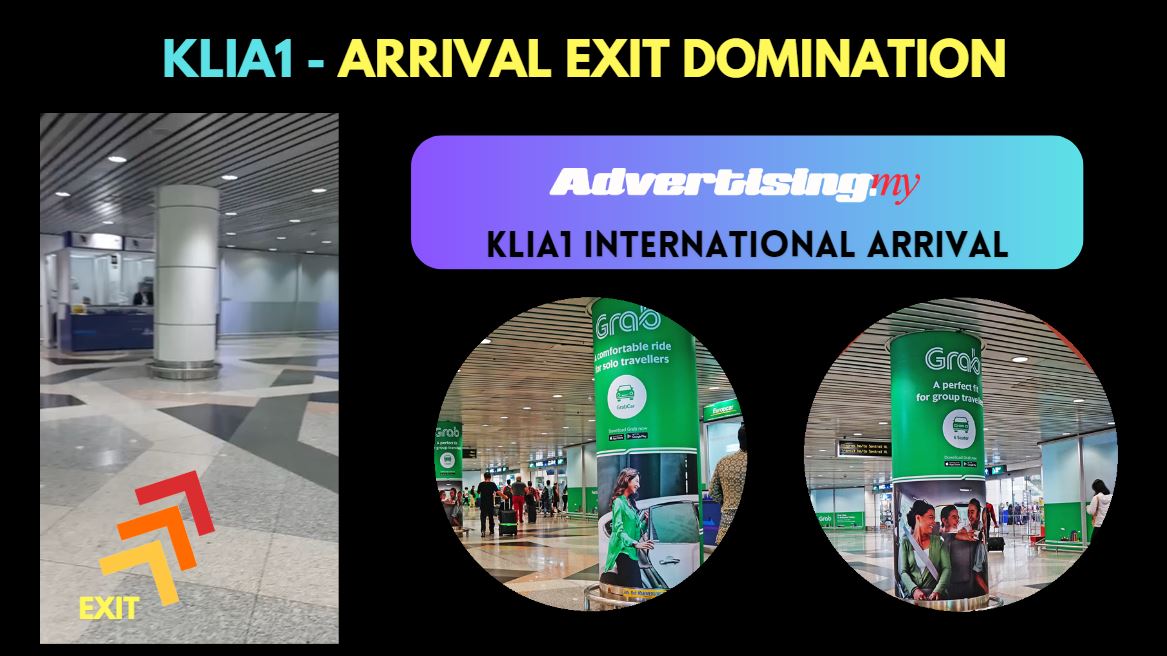
KLIA1 Media Opportunity T1 International Exit Icons gives brands a strong arrival-side presence at KLIA Terminal 1, reaching international passengers after baggage collection as they move towards the arrivals hall exit. With a combination of...
Arriving passengers at KLIA1 are still in a controlled airport mindset, watching signs, checking directions and preparing for baggage, immigration or onward transport. This arrivals impact placement combines lightboxes and wall stickers to create multiple...
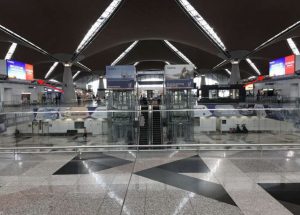
International passengers arriving at KLIA1 move through escalators, baggage areas and main arrival paths with high attention on signs and next steps. This digital arrivals impact network uses eight screens, including head-on arrival screens and...
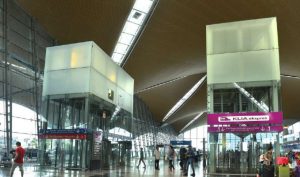
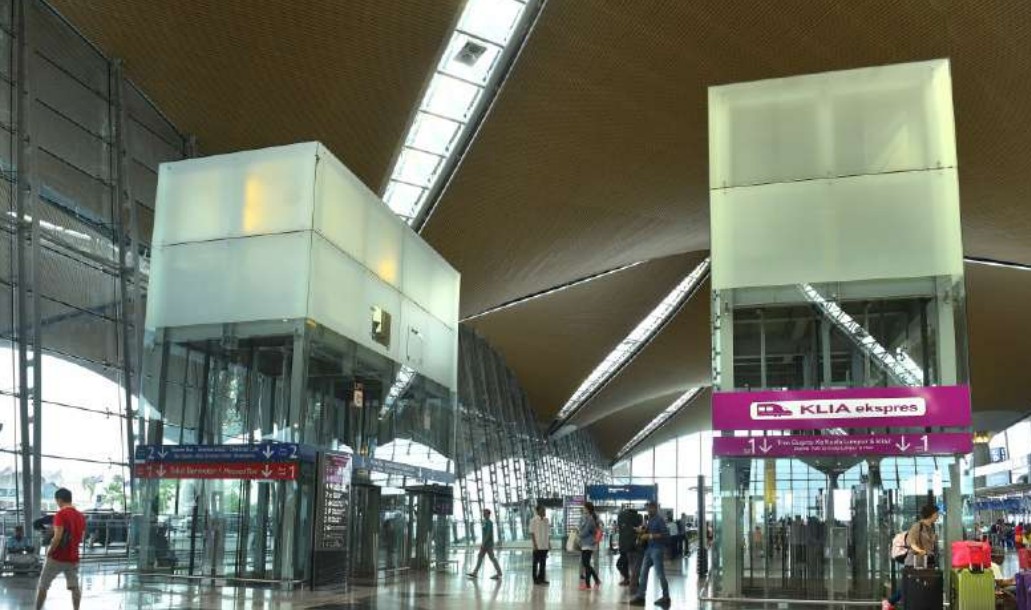
KLIA1 Media Opportunity T1 Departures Check-In Icons offers a commanding airport advertising presence above the four main lift shafts inside the KLIA Terminal 1 check-in hall. With large glass facade wraps surrounding highly visible architectural...
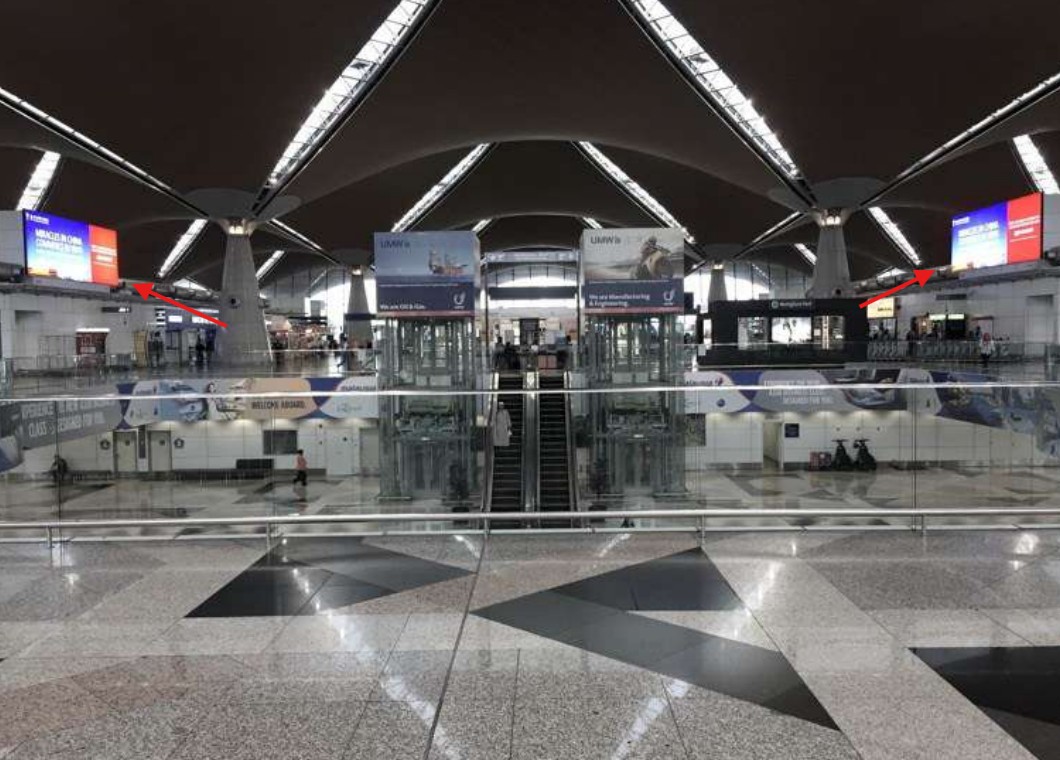
KLIA1 Media Opportunity The T1 Departures Icon is a premium pair of large-format backlit advertising units placed at one of KLIA Terminal 1’s most important passenger movement zones. Positioned on the left and right sides...
International passengers moving through KLIA1 Satellite Building are often high-value travellers with longer attention windows between gates, transfers and arrival or departure flows. This digital impact network uses three double-sided large-format LED screens positioned head-on...
KLIA TERMINAL 2 STATION, CONCOURSE NAME KLIA TERMINAL 2 CONCOURSE BULKHEADS (ERL/KLT2/CC/002 – 003) FORMAT HIGH IMPACT BOARD WITH OPAQUE STICKER Spectacular new media opportunity Bulkheads panels at escalator towards platforms Head on to the...
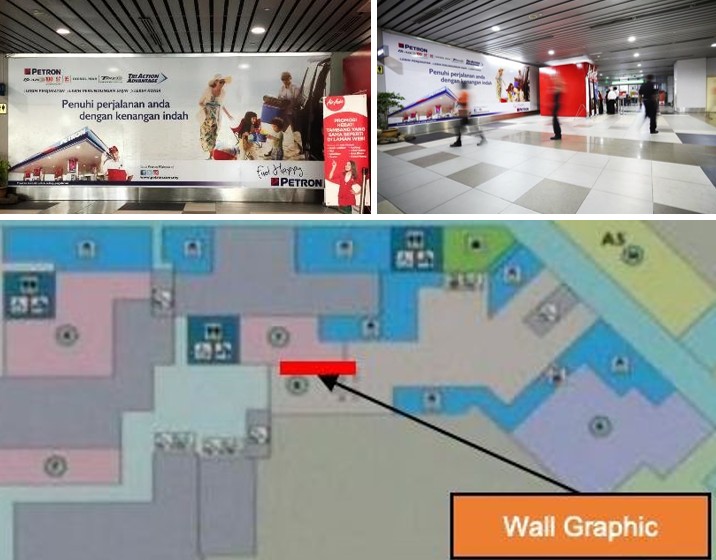
KLIA2 Media Opportunity T2 Public Concourse Departures Impact is a highly visible wall sticker media format located within the KLIA2 public concourse. Positioned to capture the attention of outbound passengers before they move deeper into...
KLIA TERMINAL 2 STATION, CONCOURSE NAME KLIA TERMINAL 2 PLATFORM DOMINATION (ERL/KLT2/CC/006 – 015) FORMAT HIGH IMPACT BOARD WITH OPAQUE STICKER Spectacular new media opportunity Opportunity to dominate the platform area with branding on the...
KLIA TERMINAL 2 STATION, CONCOURSE NAME KLIA TERMINAL 2 SIDE WALL PANELS(ERL/KLT2/CC/004 – 005) FORMAT HIGH IMPACT BOARD WITH OPAQUE STICKER Spectacular new media opportunity 4 side panels above escalator heading to the platform Head...
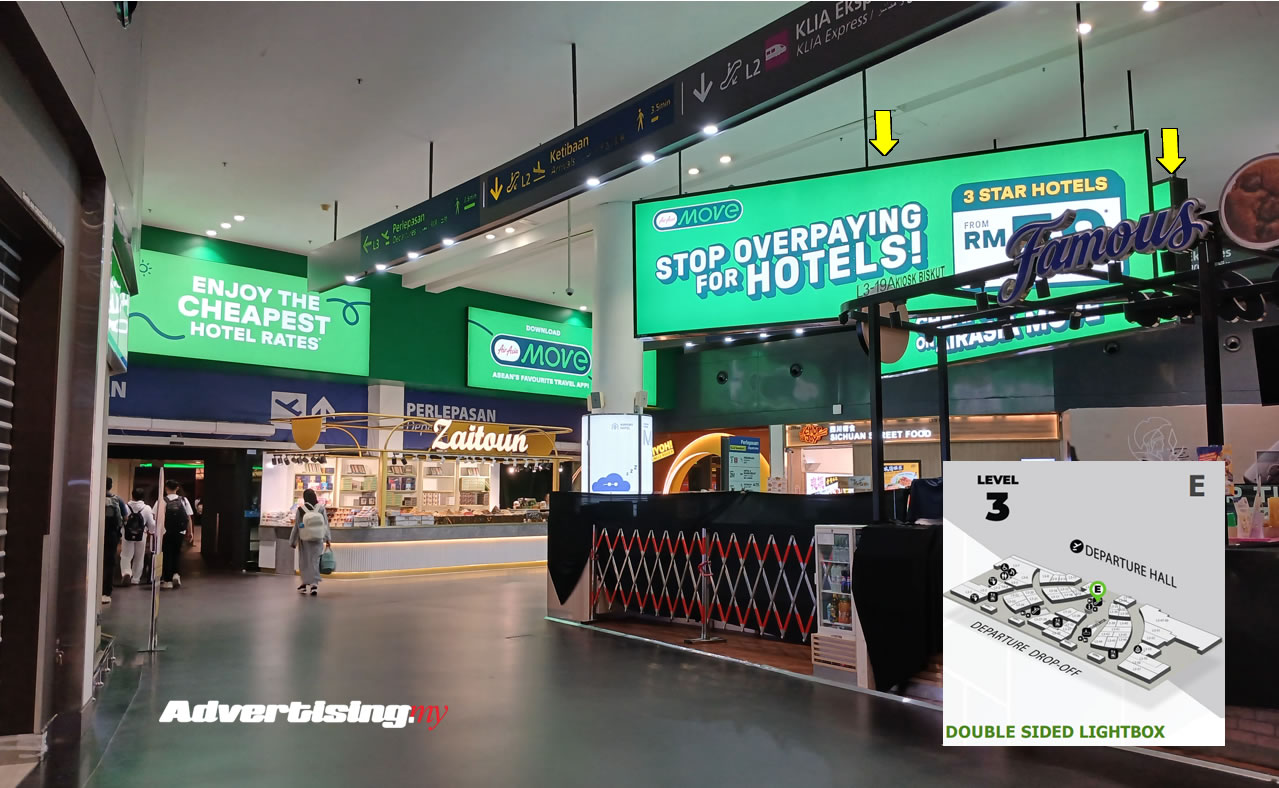
Targeting passengers at KLIA2 Arrival Hall and Gateway Shopping Mall, this double-sided hanging lightbox reaches travellers as they move through arrival flow, retail access and airport meeting points. The 6ft by 20ft double-panel format provides...
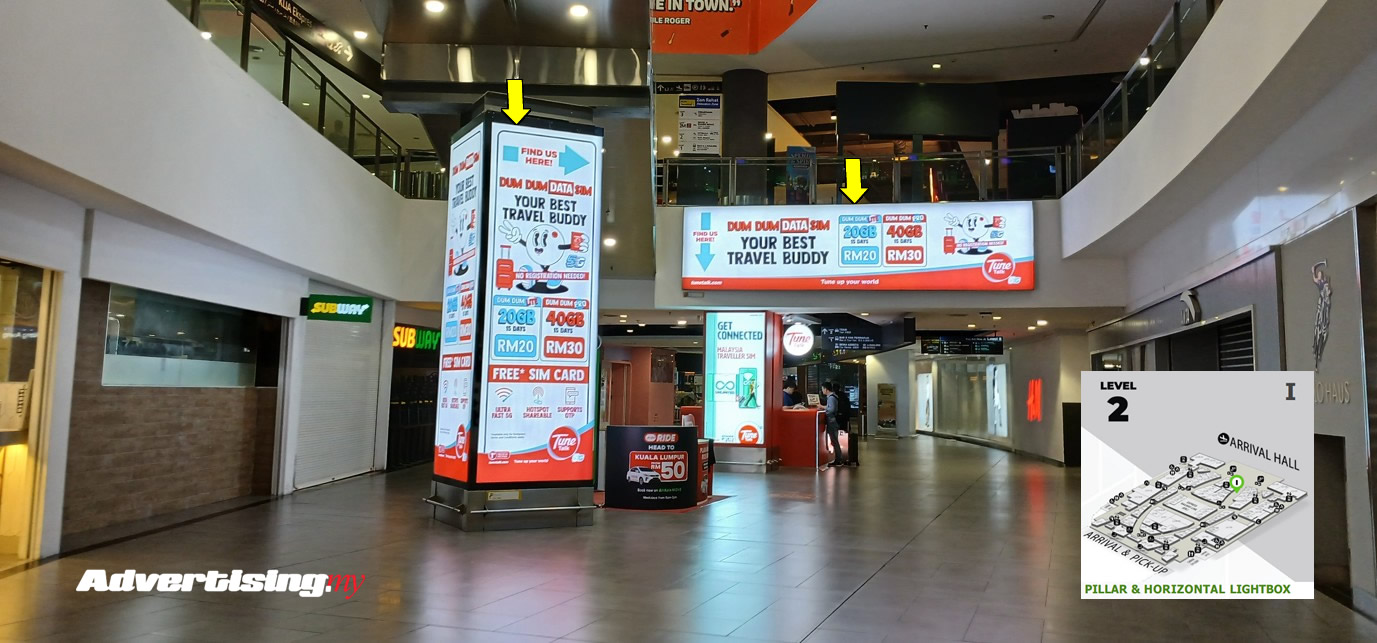
Targeting passengers inside KLIA2 Arrival Hall and Gateway Shopping Mall, the pillar and horizontal lightbox combination gives brands both close-range and wider corridor exposure. The pillar LED supports vertical impact, while the horizontal lightbox provides...
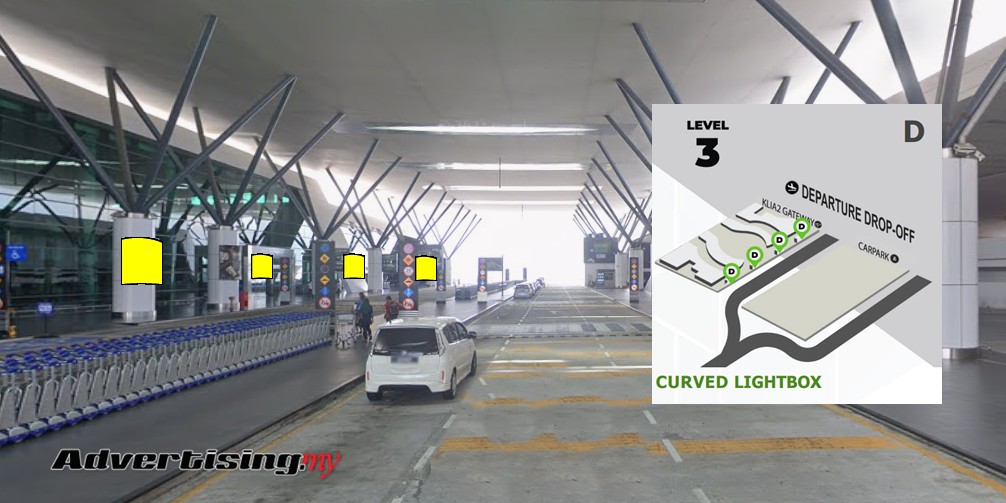
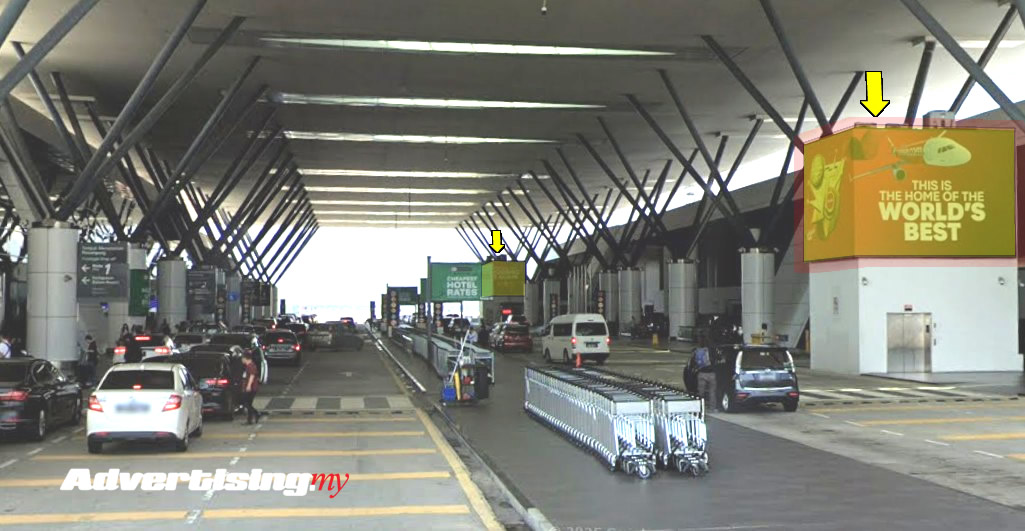
Targeting vehicles and passengers at the KLIA2 Departure Drop Off Area, this curved light box set reaches travellers during one of the most focused airport moments. The four-unit format gives brands repeated visibility as passengers...
Targeting airport users at the KLIA2 Departure Drop Off Area, this two-unit light box set gives brands strong visibility during passenger unloading and terminal approach. The location works because travellers, drivers and companions naturally slow...
There are in total 20 sites available around this area. As it is the international arrival hall, you get a lot of foreign and local tourists who are travelling into and out of Malaysia. These...
This would perhaps be the largest one you will see around the airport. It is in a highly visible and prominent location which is enacted high above the hall of the international departure area. A...
You will find this mega lightbox to be visually appealing because of its location. Located within klia2 Domestic Airport building, most passengers who are passing through to the further gates will need to go through...
There are in total 20 sites available around this area. As it is the international arrival hall, you get a lot of foreign and local tourists who are travelling into and out of Malaysia. These...
Travellers entering Kota Kinabalu Airport immigration are usually alert, facing forward and processing arrival or departure requirements. A high-quality digital screen at this entrance can reach flyers in a focused moment where the surrounding airport...
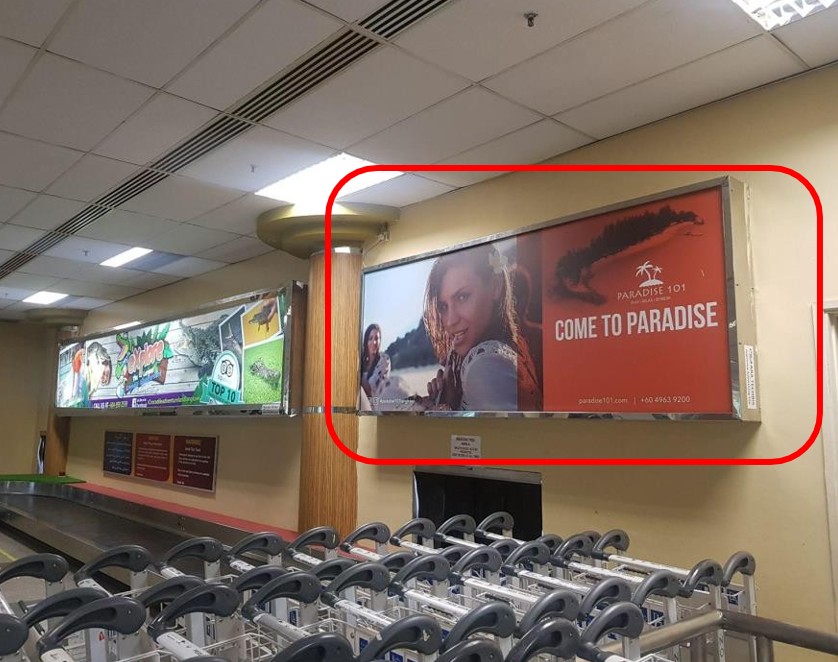
Targeting travellers inside Langkawi International Airport arrival baggage reclaim, this placement reaches passengers during the first moments after landing, when they are waiting, scanning the hall and preparing for transport or hotel movement. The area...
Targeting passengers at Langkawi International Airport arrival baggage reclaim, this centre-of-wall placement reaches travellers while they wait for luggage after landing. The baggage reclaim area gives brands longer dwell time because passengers remain in one...
During the first few minutes after landing, passengers are still inside a travel mindset and actively looking for cues on baggage, exits and transport. This domestic arrival placement gives brands a chance to influence travellers...
After landing, domestic passengers are usually thinking about baggage, pickups, family arrangements and the next stop in Penang. This arrival-route placement reaches them while they move toward the baggage reclaim hall, creating a useful transition...
As international travellers prepare for immigration, this placement reaches passengers in a focused pre-entry moment where attention is directed forward and movement is more controlled. The route toward departure processing gives brands a clear opportunity...
Targeting passengers at Penang International Airport Level 1 international arrival baggage reclaim, this placement reaches travellers during a high-dwell moment after landing. The baggage reclaim centre area is useful because passengers wait, check belts, collect...
Targeting passengers at Penang International Airport Level 3 International Arrival, this head-on placement reaches travellers descending toward the international baggage reclaim hall. The viewing angle is valuable because passengers face the message while moving through...
Targeting passengers along the Penang International Airport Level 3 international arrival bridge, this head-on view reaches travellers as they move through the arrival corridor toward baggage reclaim. The bridge setting is useful because passengers follow...
The Skypark Terminal is the third largest airport in the country where it is widely used by travelers on a daily basis. The SkyPark Terminal is located within the Sultan Abdul Aziz Shah Airport which...
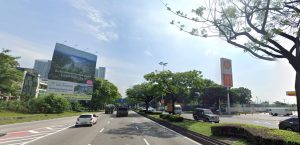
Targeting airport-bound traffic on KLIA Expressway KM1.1, this unipole reaches drivers connected to airport movement, logistics areas, hospitality zones and southern Klang Valley routes. With approximately 3.4 million traffic per month, it gives advertisers a...