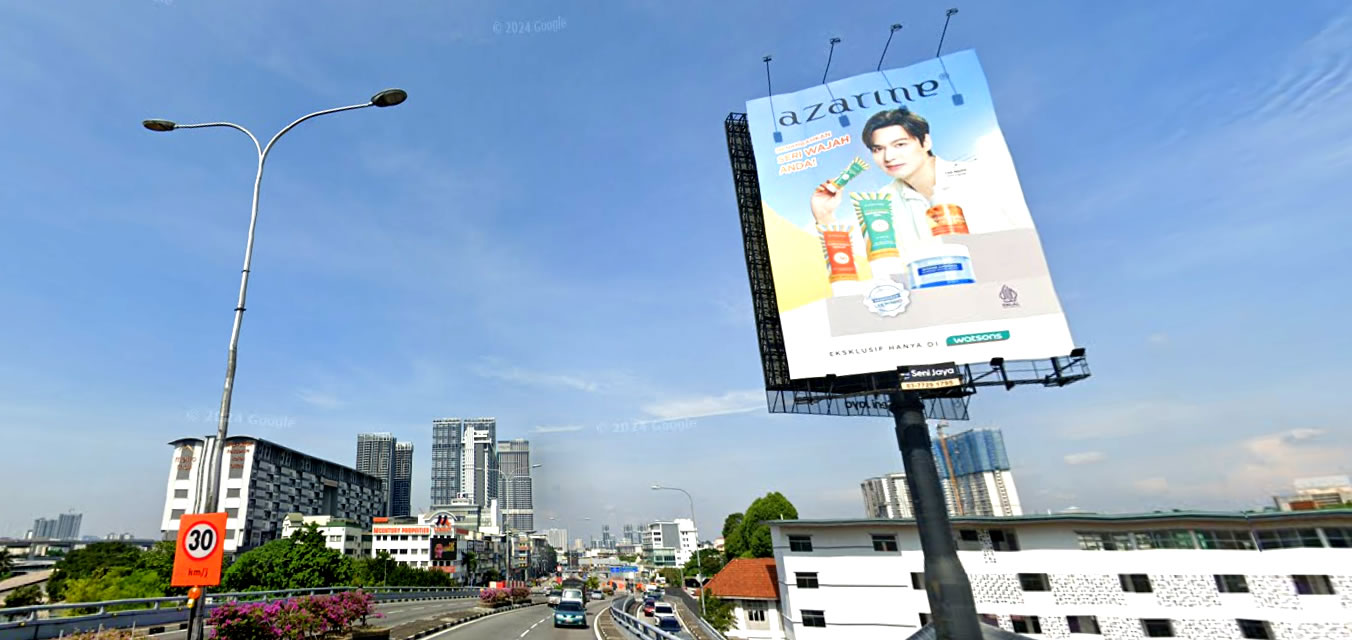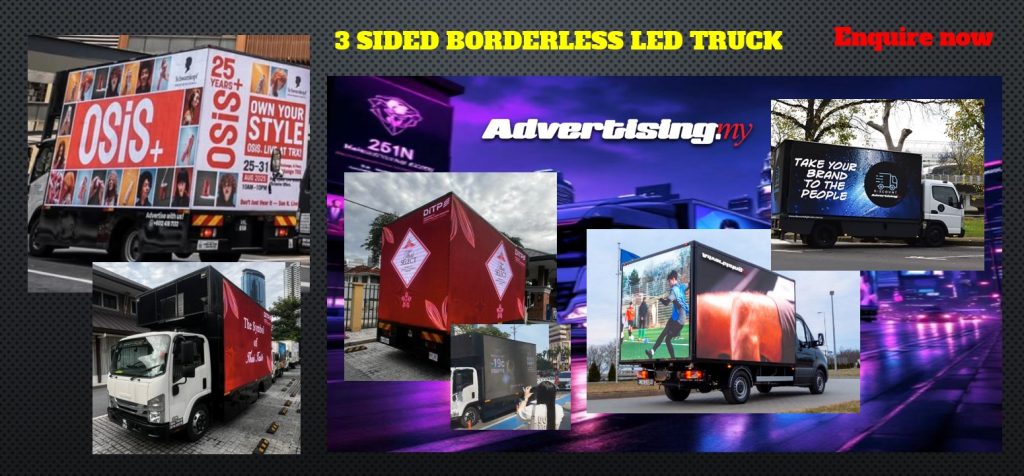
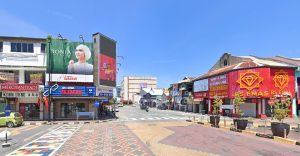
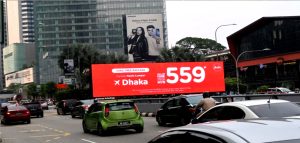
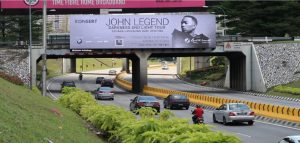
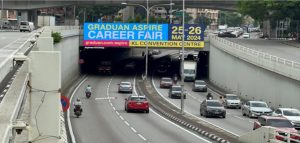

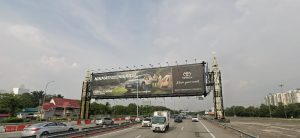

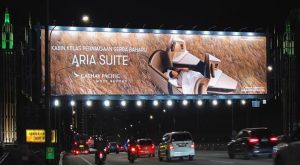

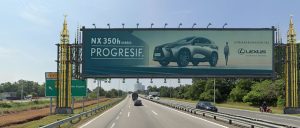

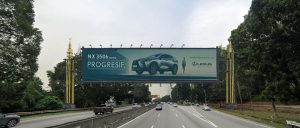
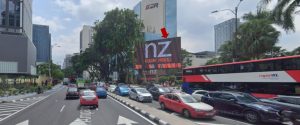
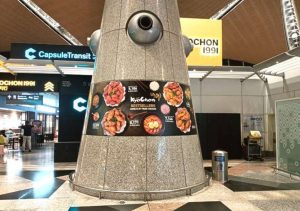

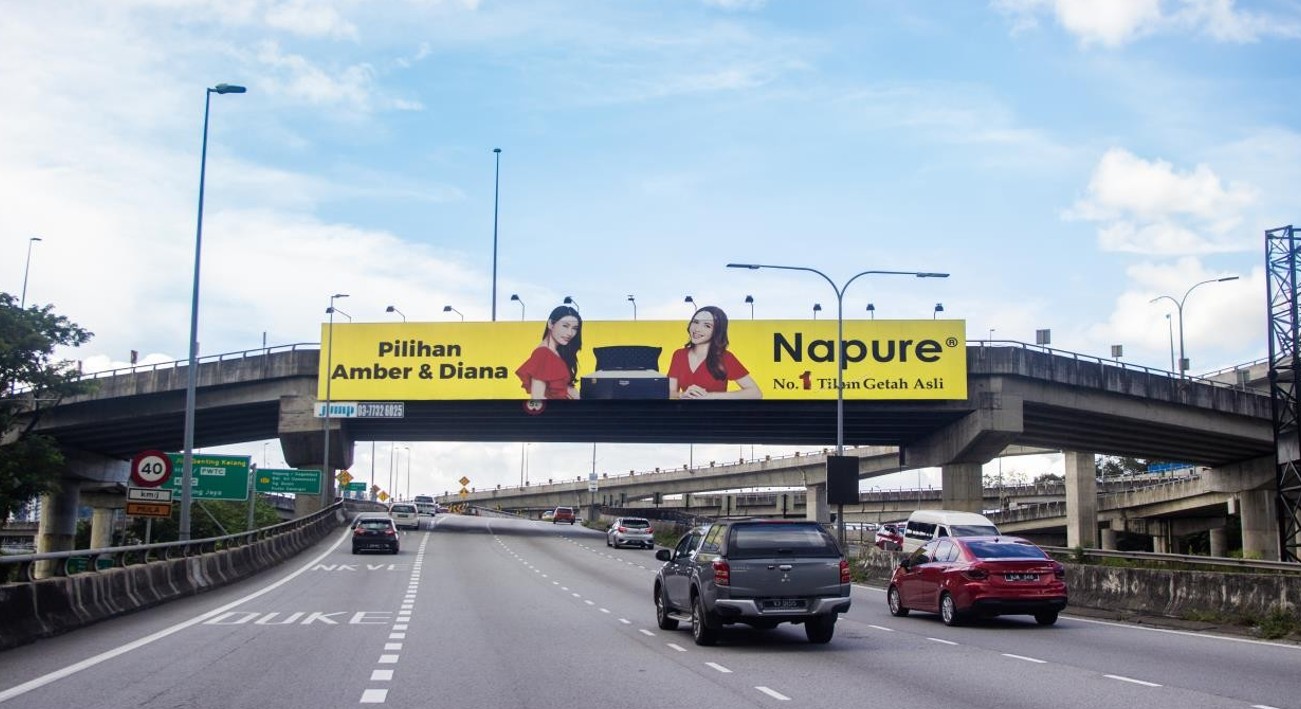
An out-of-home portfolio is a reading of a country’s traffic. Jump Media’s current inventory covers more than fifty sites, and the pattern it forms says a great deal about how Malaysia moves.
The sites are not scattered. They cluster along tolled expressways, ring roads and river-valley arteries, with a second cluster on municipal roads inside Kuala Lumpur. Together they trace the commuter map.
- Concentrated on DUKE Highway and DBKL municipal roads.
- Also PLUS expressway and southern corridor sites, suggesting a separate concession or sales arrangement.
- Jump media also have sites in LATAR highway between Kuala Selangor and Rawang.
- PLUS Highway billboards north around Sungai Dua and Permatang Pauh.
- DUKE, LDP, NKVE, LATAR, PLUS and MEX can be read straight off the code.
Jump Media Rates and Costing
- Rental, lighting and production are quoted as three separate line items rather than bundled into a single price.
- Production is charged once, and that charge covers printing, installation, removal and maintenance for the run.
- Special effects sit outside the production charge and are quoted separately against the creative supplied.
- Every offer carries a thirty-day validity from the date of proposal.
The Klang Valley Spine
Most of the sites of Jump Media sit in the Klang Valley and its central approaches. That concentration is not an accident of sales effort; it follows where the tolled traffic is densest.
DUKE Highway Carries the Largest Single Run
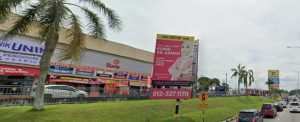
The Duta-Ulu Kelang Expressway accounts for more sites than any other single road. Positions run from the Jalan Duta toll plaza through Jalan Kuching, Gombak and Sentul Pasar, and out along the MRR2 at Ampang.
Several of these are paired panels, one facing each direction of travel. A brand buying both sides of the Jalan Duta or Jalan Kuching positions reaches the same commuter twice daily.
The Middle Ring Road
MRR2 positions at Ampang and Kepong bracket the northern arc of the ring road. The Kepong site alone is credited with an estimated 3.5 million vehicle movements per month in the rate card.
- The Ampang panels sit within reach of Melawati Mall, the National Zoo, M-City and Ampang Point.
- The Jalan Duta cluster faces Matrade, MITEC, Mont Kiara, Hartamas and Dutamas.
- Jalan Kuching positions reach Segambut, Sunway Putra Mall and PWTC.
- The Persiaran Dutamas pair covers the Jalan Sultan Haji Ahmad Shah and Duke Highway junction traffic.
- Jalan Ipoh runs toward Jalan Tun Razak, picking up KPJ Tawakal and Sunway Putra audiences.
The Western Approaches
West of the city, the portfolio follows the corridors that feed Petaling Jaya, Subang and Shah Alam. These carry the heaviest counts anywhere in the inventory.
Federal Highway and NKVE Post the Biggest Numbers
The KM34.2 Federal Highway position is credited with an estimated 7.2 million vehicle movements per month, the highest figure quoted for any site in the book.
Two NKVE positions, at KM16.9 and KM20.8, each carry an estimated 5.7 million per month. Both are listed as coming soon rather than currently available.
- LDP KM17.4 is visible from the NPE, the Federal Highway and the LDP itself, reaching Sunway Pyramid and Sunway Mentari.
- LDP Puchong KM20.5 is a parapet run sold by the panel, facing traffic from Bukit Jalil towards Puchong.
- LDP Puchong KM26.3 covers the Puchong to Kinrara and Bandar Puteri movements.
- Bukit Jalil Pavilion faces traffic from the Sungai Besi and KESAS highways, quoted at an estimated 3.3 million movements per month.
- Sungai Besi and Kuchai Lama positions pick up the MEX and Besraya flows into the city.
LATAR and the Kuala Selangor Run
The Kuala Lumpur-Kuala Selangor Expressway forms a distinct cluster of its own, with positions at KM0.0, KM3.4, KM10.9, KM16.1, KM17.7 and the KM22 interchange with the PLUS highway.
This is corridor buying rather than landmark buying. The individual sites face open highway, and their value lies in repeated exposure along a single journey rather than proximity to any one destination.
- The KM0.0 position offers three panels sold individually, before the Ijok toll.
- KM17.7 sits just past the Kundang Barat toll plaza at Exit 2505.
- KM10.9 faces traffic from Bandar Puncak Alam towards Kota Puteri, near Nirwana Memorial Park.
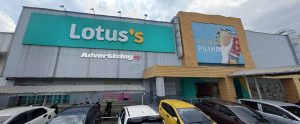
- The Puncak Alam board sits at the Persiaran Puncak Alam junction, beside Lotus Puncak Alam.
Southward on the PLUS Expressway
Beyond the Klang Valley, the portfolio follows the North-South Expressway in both directions. These are long-dwell positions where traffic is committed to the road for hours.
Negeri Sembilan and the Southern Central Belt
Positions at KM232.1 Pedas Linggi, KM257.1 Port Dickson and KM268.8 Seremban cover the Seremban, Nilai and Melaka movements, with the Seremban R&R as the nearest fixed landmark.
Johor
Five sites cover the Johor corridor. Two face the Jalan Pandan to Tebrau movement, the busiest urban artery in Johor Bahru, and three sit on the expressway approaches.
- KM22.7 Senai faces traffic from Kulai Jaya towards Senai Utara, near the Senai toll plaza.
- KM3.1 covers the Kempas to Pasir Gudang movement, reaching the KPJ Pasir Gudang catchment.
- KM10.4 Skudai faces the Skudai towards Kempas flow.
- Two Crystal Crown Hotel wall banners on Jalan Tebrau give the portfolio a building-mounted format in the city.
- KM111.8 Yong Peng sits on the northbound run towards Pagoh, currently held under review.
Penang and the Northern Region
The northern cluster is anchored by the Penang Bridge position, which carries panels facing both Seberang Perai and the island. It is the most expensive single site in the book.
Inland, the Juru, Tambun, Sungai Dua and Permatang Pauh positions cover the Butterworth and Seberang Perai Tengah corridors, each reaching the same regional landmark set.
- Sungai Dua and Permatang Pauh each offer three panels and are credited with an estimated 2.8 million movements per month.
- Juru KM139.25 sits on the PLUS approach, near the Juru toll and Auto City.
- Tambun faces traffic towards Juru, beside Aeon Bukit Minyak.
- The shared landmark set across the region includes Bandar Perda, Sunway Carnival and Butterworth.
Formats Beyond the Standard Billboard
Forty-six of the fifty-two sites are conventional billboards. The remaining six give the portfolio range in places where a freestanding structure would not fit.
Wall Banners
Four wall banner positions use existing building faces: Old Klang Road, Jalan Sungai Besi, and the two Crystal Crown Hotel walls in Johor Bahru. These work in dense urban settings.
Parapet and Multi-Panel Runs
Fifteen sites carry more than one panel, and five of those are sold by the panel rather than as a single site. This changes how a buyer should read the quoted rate.
- Twelve sites carry two panels, typically one facing each direction of travel.
- Three sites carry three panels: KM0.0 Kuala Selangor, Sungai Dua and Permatang Pauh.
- LDP Puchong KM20.5 is the sole parapet format, running panels A, B and C.
- LDP KM17.4 is quoted two ways, by the individual panel and as a full overhead run.
- Multi-panel sites are where a sequential creative becomes possible on a single approach.
The Digital Screen at Kampung Pandan
One site in the portfolio is digital. The Jump Media Screen faces traffic moving from Kampung Pandan and Jalan Tun Razak towards the Jalan Imbi and Bukit Bintang end of the city centre.
Its economics work differently from the static boards. Advertisers buy a spot within a rotating loop rather than exclusive occupancy of the face, and rates are quoted by tenure.
- The screen runs a sixteen-hour broadcast day, from seven in the morning until eleven at night.
- Each loop carries ten spots and runs two and a half minutes, giving twenty-four loops per hour.
- That schedule delivers an estimated 384 exposures per advertiser per day.
- Rates are offered at one, six and twelve-month tenures, with full-spot and half-spot options.
- The screen is credited with an estimated 350,000 vehicles and 525,000 eyeballs per day.
- Accepted content formats are MPEG-4, AVI, JPEG and PNG, with a seven to ten working day lead time before airtime.
The dual-language rule matters more than most advertisers expect. All copy on a Malaysian outdoor site must appear in Bahasa Malaysia alongside the vernacular language, and the Bahasa Malaysia text must not be set smaller. Creative is also subject to DBP approval, which the advertiser obtains and supplies to the media owner. Neither step can be compressed, so both belong in the production schedule from the outset rather than at artwork stage.